 Deutsch
  English
  简体中文
简体中文  Español
  Français
  Italiano
  日本語
日本語  한국어
한국어  Polski
  Português
  Русский
  Türkçe
  Nederlands
  ไทย
ไทย  Tiếng Việt
Vorstellung
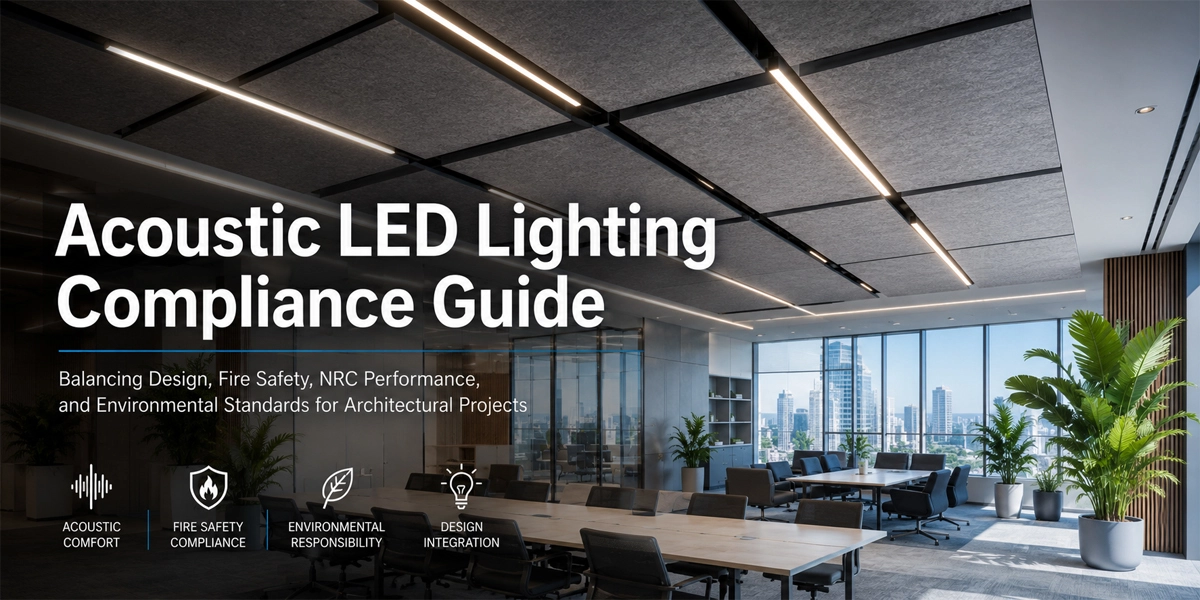
Akustische LED-Beleuchtungssysteme werden nicht mehr allein aufgrund von Design oder akustischer Leistung ausgewählt. In modernen Architekturprojekten werden Produktentscheidungen von einem mehrschichtigen Compliance-Framework getrieben, das Brandschutz, akustische Leistung, Umweltstandards und Integration von Beleuchtungssystemen kombiniert.
Zu den wichtigsten Compliance-Referenzen gehören ASTM E84 und EN13501-1 Brandklassifizierungen, NRC-basierte Schallabsorptionsdaten sowie Umweltzertifizierungen wie E1- und VOC-Emissionsnormen. Diese Berichte werden jedoch häufig falsch interpretiert, was zu falschen Materialauswahl und Konstruktionsfehlern auf Systemebene führt.
Der richtige Ansatz besteht darin, Brandschutz, Akustik und Umweltleistung als voneinander abhängige Parameter innerhalb eines einheitlichen technischen Systems und nicht als separate Spezifikationen zu behandeln.
In diesem Leitfaden wird erläutert, wie diese technischen Parameter Entscheidungen in der realen Spezifikation, das Systemdesign und die Projektkostenstruktur in architektonischen Beleuchtungsanwendungen beeinflussen.
Optimierte Schlüsselübergaben
- Akustische LED-Systeme müssen als integrierte Engineering-Systeme bewertet werden, die Brandschutz, Akustik, Umgebung und Lichtdesign kombinieren.
- Zertifizierungen wie ASTM E84, EN13501-1, NRC und E1 sind Validierungseingänge, keine eigenständigen Leistungsindikatoren.
- Dicke, Dichte und Systemstruktur beeinflussen das akustische Verhalten und die Kosteneffizienz direkt.
- Brand- und Umweltkonformität bestimmen häufig die Projektberechtigung, bevor die akustische Leistung bewertet wird.
- Die richtige Interpretation der Testdaten verbessert die Genauigkeit der Spezifikation und verringert das Beschaffungsrisiko.
Brandschutzzertifizierungen & Projektgenehmigungslogik
Die Brandschutzzertifizierung ist das primäre Compliance-Gatter bei der Auswahl der akustischen LED-Beleuchtung. In den meisten Architekturprojekten werden Produkte ohne erkannte Brandprüfberichte in der ersten Spezifikationsphase eliminiert, unabhängig von der akustischen oder konstruktiven Leistung.
Die Compliance-Verifizierung basiert auf standardisierten Labortestberichten, auf die in Design-Zulassungen und Beschaffungsdokumentationen direkt verwiesen wird.
Wichtige Brandschutznormen sind:
- ASTM E84 Klasse A (Bericht hier klicken: SDFS2412007…)
Erforderlich für gewerbliche und öffentliche Gebäude in Nordamerika, Bewertung der Ausbreitung von Flammen und Rauchentwicklung - FM-Grundtests für die Feuerwiderstandsfähigkeit (Bericht hier klicken: FM1300780A..)
Wird zur Validierung der Zündbeständigkeit von PET-Akustikmaterialien unter kontrollierten Bedingungen verwendet - EN13501-1 Klassifizierung (Bericht hier klicken: GZIN2005020…)
Europäischer Brandreaktionsstandard, weithin benötigt für architektonische Innenräume (in der Regel B-S1,D0)
Übersicht über die Brandbescheinigung
| Standard / Bericht | Region | Aufgabe | Projektrolle |
| FM-Basisfeuertest | General | Material Zündwiderstand | Einstiegsvalidierung |
| ASTM E84 Klasse A | USA / Kanada | Flammenaufstrich + Rauchkontrolle | Pflicht für Gewerbebauten |
| EN13501-1 | EU | Klassifizierung der Brandreaktion | Anforderungen an die Einhaltung von Vorschriften |
Brandschutz als Projekteinfahrtstor
In realen architektonischen Arbeitsabläufen fungiert die Brandzertifizierung als Pass/Fail-Filter, bevor die akustische Leistung bewertet wird.
- Zertifizierte Materialien → Enter Design- und Bieterphase
- Nicht zertifizierte Materialien → Ausgeschlossen bei der Überprüfung der frühen Spezifikation
- Höhere Brandklassifizierungsstufen → Höhere Akzeptanzwahrscheinlichkeit in strengen kommerziellen Projekten
Damit ist die Brandkonformität nicht nur eine Sicherheitsanforderung, sondern auch eine Voraussetzung für den Marktzugang in architektonischen Beleuchtungssystemen.
Brandkonformität und Marktpositionierung
Die Brandzertifizierungsstufe beeinflusst direkt die Produktpositionierung im Markt für akustische LED-Beleuchtung.
Produkte mit ASTM E84-Klasse A oder EN13501-1 werden typischerweise in high-end-kaufmännischen, institutionellen und öffentlichen Projekten eingesetzt, bei denen die Dokumentation streng und obligatorisch ist.
Daher werden Preisunterschiede nicht nur von der Materialstruktur, sondern auch von der für die Projektgenehmigung erforderlichen Compliance-Qualität bestimmt.
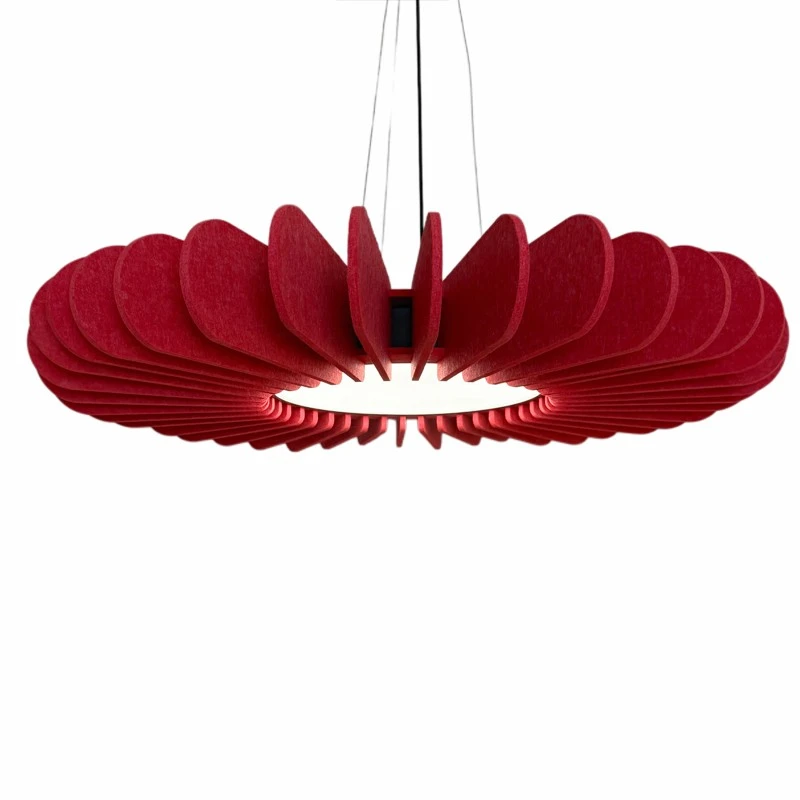
Ultradünne, runde akustische LED-Pendelleuchte
Eingangsspannung: AC100-277V / AC220-240V,50-60Hz
Gehäusegröße: 120 mm
Aussendenrichtung: nach unten
Größe D*H: 500 * 80mm
CCT: 3000K / 4000K / 6000K
Kraft: 15W
Lichtstrom: 100-110lm/W
CRI: > 90ra
Pf: > 0,90
Flicker frei: ja
Abstrahlwinkel: 120°
IP-Note: IP20
Akustikpanel-Farboption: Rot / Grün / Blau / Grau Mehr als 48 Farben Option
Akustische Leistung & Dickenbasiertes Engineering-Modell
Im Gegensatz zu Brandschutzkonformität, die die Projektberechtigung bestimmt, definiert die akustische Leistung, wie sich das System in realen architektonischen Umgebungen nach der Installation verhält.
Bei PET-Akustik-LED-Systemen wird die Leistung nicht durch das Oberflächenbild bestimmt, sondern durch eine Kombination aus Materialstärke, Faserdichte, Trägerstruktur und Installationsbedingungen.
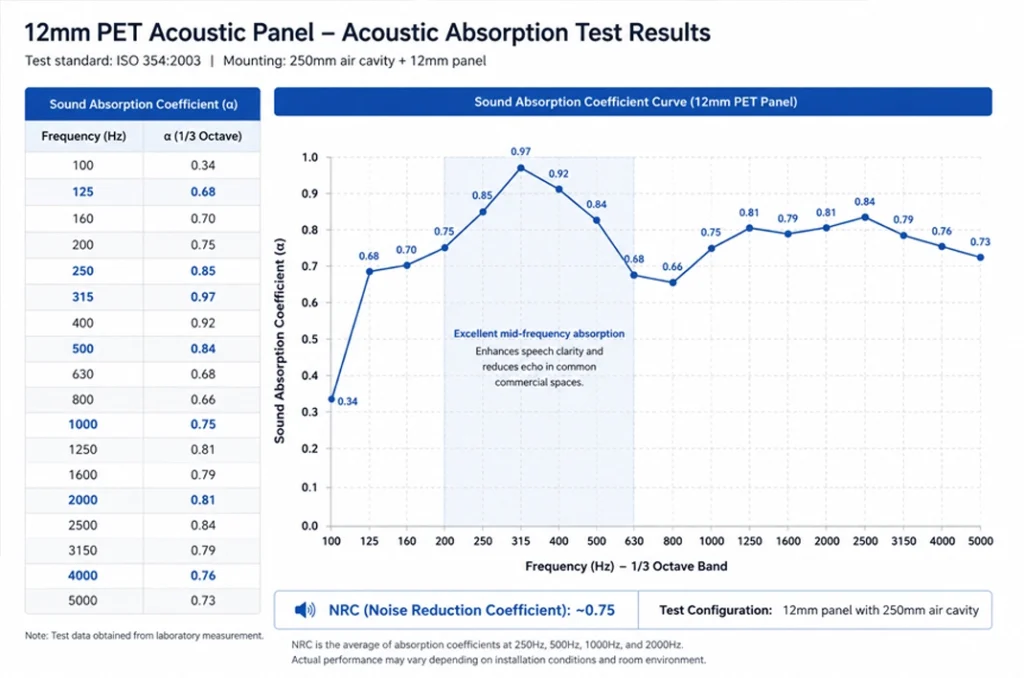
Unter diesen Variablen ist die Dicke der primäre technische Regelungsparameter, insbesondere für die Schallabsorption in der Mitte der Frequenz, der die Sprachklarheit in Gewerberäumen direkt beeinflusst.
Akustisches Dicken-Leistungsmodell
PET-Akustik-Leistungsskalen in einem vorhersehbaren technischen Muster:
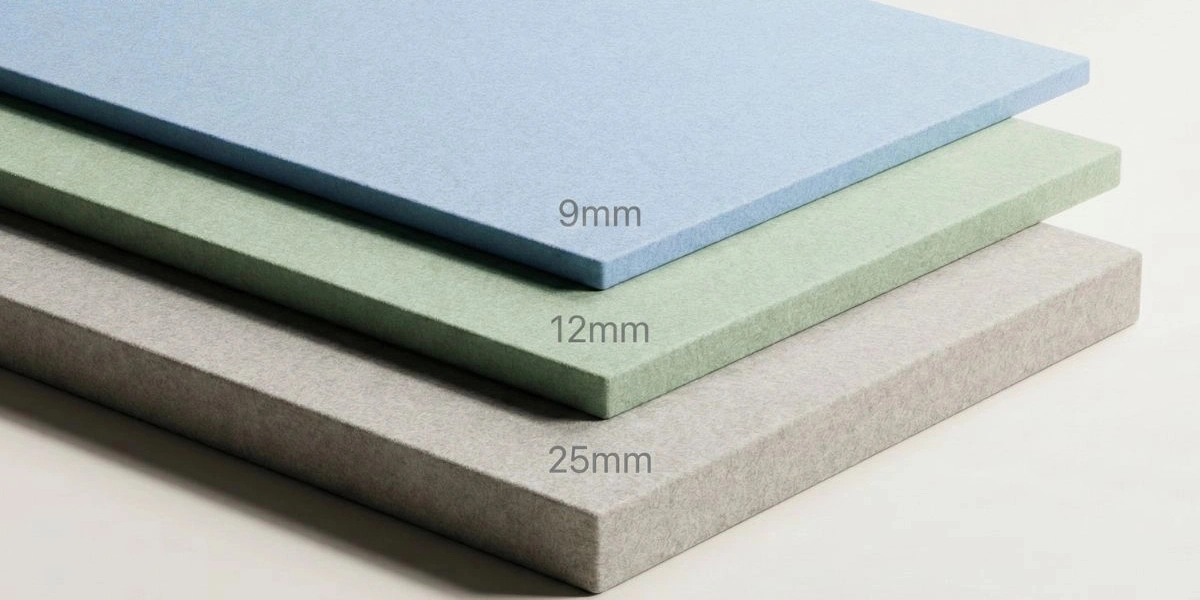
- 9mm Systeme → Akustische Korrektur auf Oberflächenebene, Hochfrequenzdiffusion
- 12mm Systeme → Ausgewogene Leistung für Sprachklarheit und allgemeine kommerzielle Umgebungen
- 18–24mm Systeme → Erhöhte Absorption von mittlerer bis niedriger Frequenz für Umgebungen mit Geräuschkontrolle
- 25mm+ Verbundsysteme → Vollspektrum Akustische Steuerung mit Rückenintegration (Woll-/ Mineralfasersysteme)
Diese Skalierungsbeziehung macht die Dicke zum wichtigsten Auswahlparameter der ersten Ebene im akustischen Systemdesign.
Akustisches Verhalten auf Systemebene
Die tatsächliche akustische Leistung wird nicht allein durch die Dicke definiert. Es wird durch Variablen auf Systemebene beeinflusst, einschließlich:
- Faserdichte und Kompressionsverhältnis (beeinflusst die Energieabsorptionseffizienz)
- Trägermaterialien wie Akustikwolle oder Mineralfaser (erweitert die Absorptionstiefe)
- Installationsmethode und Oberflächenbedeckungsgrad (betrifft Real- vs-Labor-Leistungslücke)
- Raumfunktion und Lärmstärke (definiert die NRC-Anforderung an die Zielgröße)
Aufgrund dieser Variablen sollten PET-Akustiksysteme als integrierte akustische Systeme und nicht als Einzelmaterialien bewertet werden.
2 . Dickengesteuerte akustische Leistungsskalierung
PET-Akustikleistung steigt mit der Materialstärke schrittweise an:
- 9mm PET-Systeme → Oberflächen-Level-Akustikkorrektur, Hochfrequenzdiffusion
- 12mm PET-Systeme → ausgewogene Sprachklarheit und handelsübliche Leistung
- 18–24-mm-PET-Systeme → Erweiterte Absorption von mittlerer bis niedriger Frequenz
- 25mm+ / Verbundsysteme → Akustische Vollbereichssteuerung mit Backing-Integration
Dies macht die Dicke zu einem primären Auswahlparameter im Akustikbaudesign, nicht nur zu einer Produktspezifikation.
Akustische Performance-Interpretation (Engineering View)
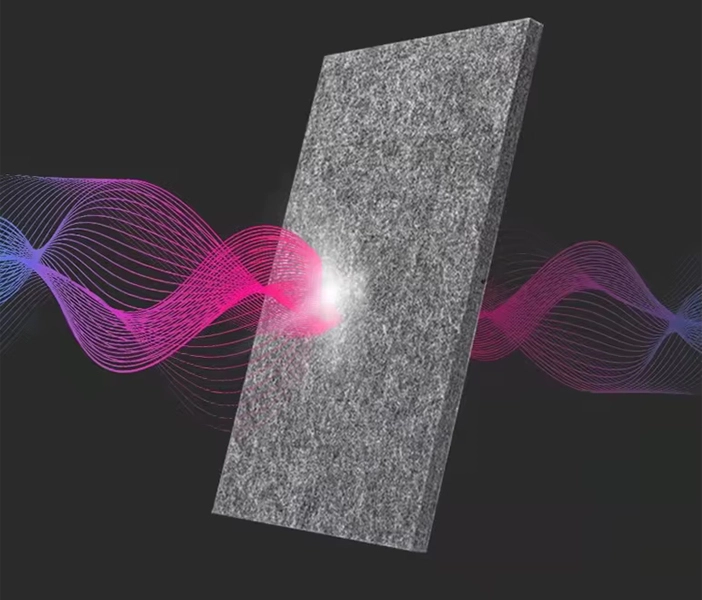
NRC (Geräuschreduktionskoeffizient) sollte als vereinfachter durchschnittlicher Leistungsindikator verstanden werden, Keine vollständige Darstellung des Akustikverhaltens.
Es spiegelt nicht wider:
- frequenzspezifische Absorptionskurven
- Installationsabhängige Leistungsvariation
- Interaktionseffekte auf Systemebene
Aus diesem Grund werden Labordaten wie akustische Absorptionstestberichte typischerweise als Referenzwerte für technische Base und nicht als endgültige Entwurfswerte verwendet.
Akustische Auswahllogik
In realen Arbeitsabläufen der Architektur wird die akustische Leistung wie folgt bewertet:
- Ziel-Akustikumgebung (Büro, Einzelhandel, Gastgewerbe, etc.)
- Wählen Sie die gewünschte Absorptionsstufe (Sprachklarheit vs. Noise Control)
- Systemdickenbereich bestimmen
- Dichte und Trägerstruktur entsprechend anpassen
Dies macht das akustische Design zu einem Systemkonfigurationsprozess, nicht zu einer Auswahlentscheidung für Einzelmaterialien.
Umweltsicherheit, VOC-Kontrolle & Raumluftqualitätsrahmen
Bei modernen Architekturbeleuchtungsprojekten ist die Einhaltung von Umweltschutzbedingungen zu einer wichtigen Spezifikationsanforderungen geworden, insbesondere in langfristig besetzten Räumen wie Büros, Bildungseinrichtungen, Einzelhandelsumgebungen und Innenräumen im Gastgewerbe.
Im Gegensatz zu akustischer Leistung, die sich auf die Benutzererfahrung auswirkt, beeinflusst die Einhaltung der Umwelt direkt die Genehmigung des Projekts, die Materialberechtigung und die regulatorische Akzeptanz.
Umweltkonformität als Spezifikationsvoraussetzung
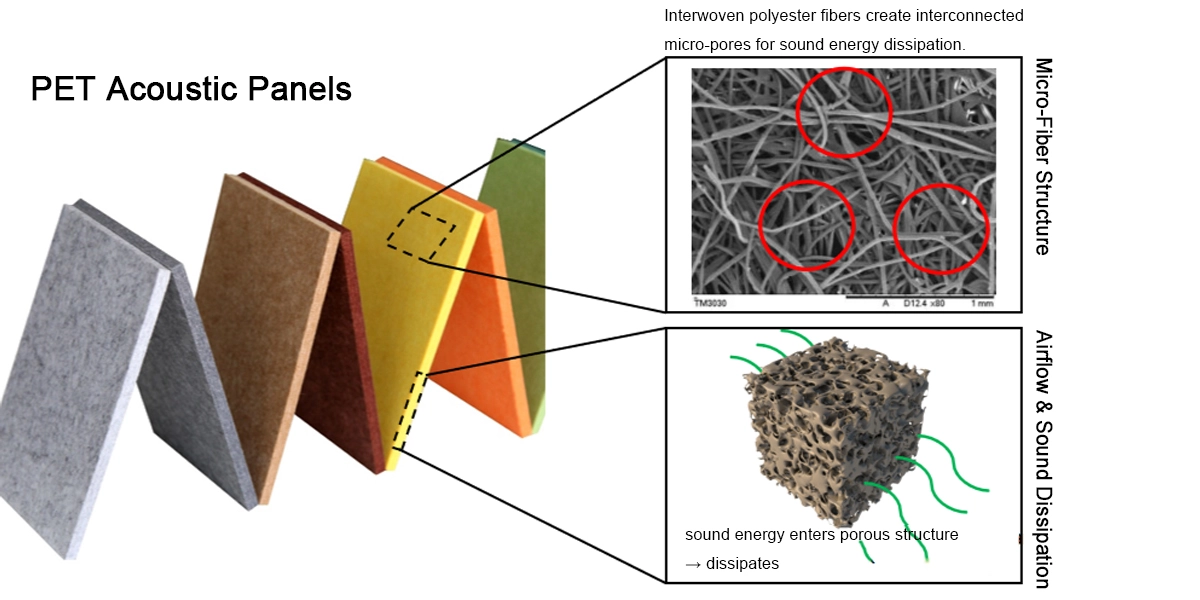
PET-Akustikmaterialien werden aufgrund ihrer emissionsarmen Faserstruktur und der stabilen Polyesterzusammensetzung in architektonischen Beleuchtungssystemen weit verbreitet und sind für geschlossene Innenräume mit kontinuierlicher menschlicher Belegung geeignet.
Die Einhaltung von Umweltschutz wird in der Regel durch standardisierte Zertifizierungsberichte überprüft, die in Projektgenehmigungsworkflows verwendet werden.
Wichtige Dimensionen der Umweltkonformität
1. Formaldehyd-Emission (E1-Standard)
E1-Konformität zeigt extrem niedrige Formaldehyd-Emissionswerte an, wodurch die Eignung für geschlossene Innenräume gewährleistet wird.
PET-Akustikmaterialien erzielen aufgrund ihrer Struktur aus nicht Holzfasern und der Abwesenheit von Emissionsquellen auf Klebstoffbasis eine konforme Leistung.
2 . VOC-Emissionskontrolle
Im Vergleich zu herkömmlichen akustischen Materialien auf Holzbasis setzen PET-Systeme typischerweise nicht auf lösungsmittelbasierte Klebstoffe.
Dies reduziert die Emissionen flüchtiger organischer Verbindungen erheblich und verbessert die Stabilität der Luftqualität in Innenräumen, insbesondere bei:
- Büro
- Tagungsräume
- Bildungsumgebung
3. Materialstabilität & langfristige Innenleistung
PET-Akustikplatten werden aus Polyesterfasermaterialien mit stabilen physikalischen und chemischen Eigenschaften unter normalen Innenbedingungen hergestellt.
Zu den wichtigsten Merkmalen gehören:
- Keine Klebesysteme auf Formaldehydbasis
- Minimale Gasemission während der Alterung
- Stabile Faserstruktur bei Langzeitanwendung
Anwendungsperspektive (Umweltanforderungen)
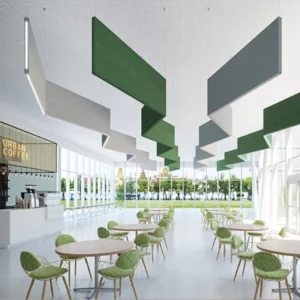
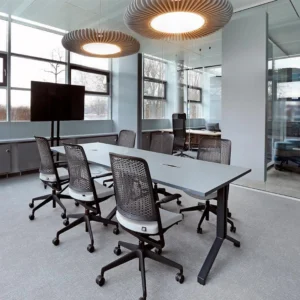
Aus Compliance-Sicht werden PET-Akustiksysteme häufig in Umgebungen spezifiziert, die eine kontrollierte Luftqualität erfordern, einschließlich:
- Geschäftsgebäude
- Bildungseinrichtungen
- Innenräume
- Gaststättenumgebungen
Diese Anwendungen erfordern in der Regel sowohl die Sicherheit der Insassen als auch die langfristige Emissionsstabilität, was die Umweltzertifizierung in frühen Projektphasen zu einem wichtigen Auswahlfaktor macht.


Auswahllogik, Compliance-Prioritäten & Beschaffungsentscheidungsrahmen
Die Auswahl und Preisgestaltung von PET-Akustik-LED-Systemen wird nicht durch einen einzigen Parameter wie Dicke oder NRC-Wert bestimmt. Stattdessen werden sie von einem multi-Faktor-Engineering-Evaluierungsrahmen angetrieben, das Compliance-Anforderungen, akustische Leistungsziele, Systemstruktur und Installationskomplexität kombiniert.
Unterschiedliche Projekttypen priorisieren unterschiedliche Anforderungen, was letztendlich sowohl die Systemkonfiguration als auch die Kostenebene definiert.
Beschaffungsentscheidungshierarchie (Wie Projekte bewertet werden)
In realen architektonischen Arbeitsabläufen werden PET-Akustik-Beleuchtungssysteme typischerweise in der folgenden Reihenfolge bewertet:
1. Compliance-Berechtigung (nicht verhandelbarer Filter)
Vor allen akustischen oder konstruktiven Überlegungen muss das System die gesetzlichen Anforderungen erfüllen, einschließlich:
- Brandschutzkonformität (ASTM E84 / EN13501-1)
- Luftqualitätsstandards für Innenräume (E1 / VOC)
Wenn die Einhaltung nicht erfüllt wird, wird das Produkt unabhängig von Leistung oder Preis eliminiert.
2. Zieldefinition der akustischen Leistung
Sobald die Einhaltung erfüllt ist, wird das erforderliche akustische Ergebnis basierend auf der Raumfunktion definiert:
- Grundumgebungen → Echoreduktion und Sehkomfort
- Gewerbeflächen → Sprachklarheitsoptimierung
- High-End-Umgebungen → Breitband-Rauschkontrolle
Dies bestimmt die erforderliche Dickenstufe und Systemdichte.
3. Systemstruktur und Installationsmethode
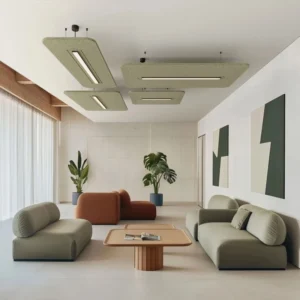
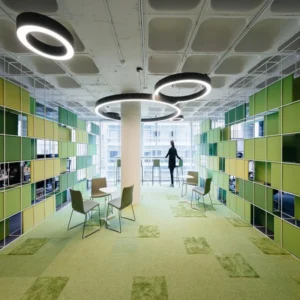
Akustische LED-Systeme sind keine Einzelmaterialien, sondern integrierte Baugruppen, die häufig in verschiedene Strukturformen wie z. Akustikklinge, Akustik-Schallwand und akustische Beleuchtungssysteme. drohen Gemeine Konfigurationen sind:
- Direkt montierte PET-Paneele
- Akustische Systeme für abgehängte Decken
- PET + Akustikwolle-Verbundstrukturen
- Voll integrierte architektonische akustische Beleuchtung
Komplexere Strukturen erhöhen sowohl die technischen Anforderungen als auch die Installationskosten.
4. Anforderungen an die Beleuchtungsintegration (Engineering-Einschränkungen)
Bei akustischen LED-Beleuchtungsanlagen muss die Lichtleistung mit akustischen und strukturellen Designbeschränkungen ausgeglichen werden. Wichtige technische Parameter sind:
- UGR (Unified Blendung) sorgt für visuellen Komfort in Büroumgebungen, die normalerweise UGR <19 erfordern
- Wärmemanagement: PET-Gehäuse erfordern eine kontrollierte Wärmeableitung, um die Lebensdauer der LED zu erhalten
- SDCM (Farbkonsistenz): Gewährleistet ein einheitliches Erscheinungsbild über mehrere Fixtures in architektonischen Räumen
- Stabilität des Systems: Beeinflusst durch Gehäusedesign und thermische Bedingungen
Diese Faktoren definieren nicht die Preisgestaltung allein, sondern beeinflussen die Systemarchitektur und die Komponentenauswahl.
Preislogik (Warum die Kosten abweichen)
Preisunterschiede bei PET-Akustik-LED-Systemen werden nicht allein durch das Material, sondern durch die Systemkomplexität und die Compliance-Level bestimmt.
Zu den höheren Kosten gehören typischerweise:
- Höhere Schalldichte (18–25mm Verbundsysteme)
- Strengere Dokumentation zu Brand und Umwelt
- Integrierte Lichttechnik-Komponenten
- Komplexere Installationsstrukturen
Infolgedessen spiegelt die Preisgestaltung eher die Komplexität der technischen als die Materialkosten wider.
Spezifikationsstufenmodell (Marktstrukturansicht)
| Systemebene | Ausgestaltung | Akustik | Anwendung | kosten |
| Einsteiger-Ebene | 9mm PET-Paneele | Grundlegende akustische Korrektur | Dekorative / leichte Nutzung | naturge |
| Handelsstandard | 12mm PET-Systeme | Ausgewogene Sprachklarheit | Büros / Einzelhandel / Bildung | mittlere |
| hilfsbereit | 18–25mm Verbundsysteme | Akustische Vollbereichssteuerung | Gastfreundschaft / Premium-Interieur | high |
Zusammenfassung der Beschaffungslogik
Bei realen Beschaffungs-Workflows folgt die Entscheidungsfindung einer strengen Hierarchie:
- Compliance-Zulassung (Feuer + Umwelt)
- Definition der akustischen Leistungsanforderung
- Kompatibilität der Systemstruktur
- Budgetausrichtung
Dadurch wird sichergestellt, dass die Preisgestaltung erst nach Bestätigung der technischen und behördlichen Durchführbarkeit bewertet wird.
FAQ
Schluss
Die Auswahl eines akustischen LED-Beleuchtungssystems ist keine Einzelmaterialentscheidung, sondern ein mehrschichtiger technischer Bewertungsprozess, der die Einhaltung von Brandschutz, die Anforderungen an die akustische Leistung, die Umweltstandards, die Beleuchtungsintegration und die Installationsstruktur umfasst.
In modernen Architekturprojekten müssen diese Faktoren eher als integriertes System als als unabhängige Spezifikationen bewertet werden. Unter diesen bestimmt die Compliance die Berechtigung, die Akustik definiert die Leistung und die Systemtechnik definiert die endgültigen Kosten und die Machbarkeit.
Da kommerzielle und architektonische Umgebungen weiterhin höhere Standards in Bezug auf akustisches Komfort, Beleuchtungsqualität und Einhaltung der Vorschriften erfordern, werden integrierte PET-Akustik-LED-Beleuchtungssysteme zu einer wichtigen Lösung für Büro-, Einzelhandels-, Bildungs- und Gastgewerbeanwendungen, was die breitere Verschiebung in Richtung Akustische Beleuchtung als prägendes Element des modernen Arbeitsplatzdesigns.
Benötigen Sie Unterstützung bei Ihrer Projektspezifikation?
Wir bieten Unterstützung auf technischer Ebene für die Integration von Architekturbeleuchtung und akustische Systeme, einschließlich:
- Empfehlung für PET-Dicke und Systemkonfiguration
- NRC-Performance-Interpretation für reale Projektbedingungen
- Dokumentation zur Brandschutz- und Umwelt-Compliance-Unterstützung
- Akustische + Beleuchtung Integrierte Layoutplanung
- Kostenstrukturoptimierung für Projektgebote
Technische Dokumentation auf Anfrage erhältlich:
- ASTM E84-Brandtestbericht der Klasse A
- EN13501-1 Bericht zur Brandklassifizierung
- Daten zur akustischen Absorption von NRC
- E1 / VOC-Umweltberichterstattung
Schlusseinblick
Bei der realen Beschaffung werden die erfolgreichsten Projekte nicht anhand einer einzigen Leistungsmetrik ausgewählt, sondern darauf, wie gut Compliance, Akustik und Systemtechnik in einer integrierten Lösung ausgeglichen werden.