 Polski
  English
  简体中文
简体中文  Deutsch
  Español
  Français
  Italiano
  日本語
日本語  한국어
한국어  Português
  Русский
  Türkçe
  Nederlands
  ไทย
ไทย  Tiếng Việt
Problem zaczyna się przed wyborem produktu. Kupujący wyszukuje “ostrze akustyczne”, otrzymuje wyniki dla przegród, a następnie widzi wersje oświetlenia nałożone na wierzchu. Badania Harvard Business Review wykazały, że brak sound prywatność jest największym drenażem morale pracowników w przestrzeniach komercyjnych. Rozwiązanie istnieje, ale wiele projektów staje się mylących, ponieważ producenci, specyfikatorzy i kupujący często używają tych nazw produktów w różnych katalogach i rodzinach produktów. Zanim skończysz czytać, będziesz dokładnie wiedzieć, czym właściwie jest każdy produkt, jak się różnią i czego naprawdę potrzebuje Twój projekt.
Dlaczego te produkty są tak łatwe do pomylenia i dlaczego to zamieszanie jest kosztowne
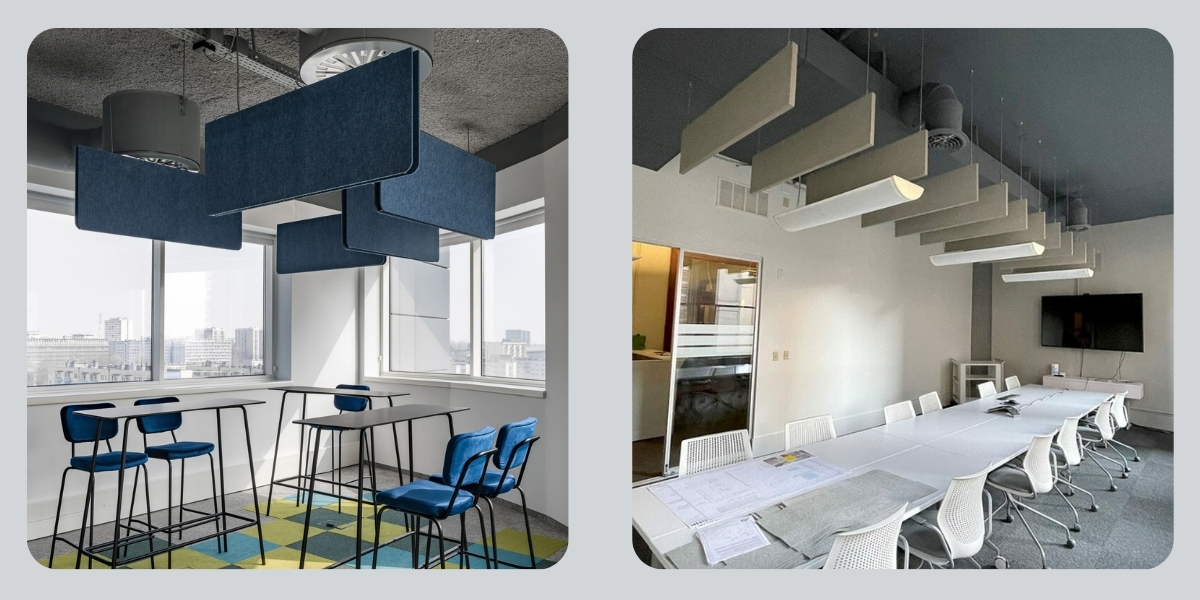
Zamieszanie nie jest przypadkowe. W komercyjnych katalogach oświetlenia akustycznego produkty ostrza są często pogrupowane w szersze kategorie przegrody akustycznej. Jest to szczególnie powszechne w liniowych systemach sufitowych akustycznych, gdzie terminologia nakłada się na formę produktu, styl montażu i rodzinę systemów. Na przykład Focal Point wymienia zarówno Trublade, jak i Aircore Blade cienkie, nieoświetlone, jednopanelowe produkty w kategorii produktów z przegrodą liniową, obok grubych zintegrowanych systemów, takich jak SEVE 2 Acoustic Direct. Ta sama nazwa kategorii, zupełnie inne produkty. To jest dokładnie zamieszanie, z jakim borykają się kupujący. Dodaj oprawę oświetleniową, a teraz masz światło ostrza i światło przegrody. Następnie niektóre marki integrują oświetlenie od samego początku, podczas gdy inne po prostu je dołączają. To tworzy czwartą warstwę zamieszania. Dla kupującego, wszystkie cztery mogą wyglądać podobnie na pierwszy rzut oka. W wyniku projektu są zupełnie inne.
Ma to znaczenie, ponieważ większość dzisiejszych przestrzeni komercyjnych faktycznie wymaga obróbki akustycznej na dużą skalę. New York Times donosi, że około 70 procent biur w USA to środowiska na otwartym planie. Oznacza to duże objętości, odsłonięte sufity i stałe odbicie hałasu. Zapotrzebowanie na rozwiązania akustyczne jest realne. Problem polega na tym, że kupujący często dopasowują niewłaściwy produkt do tego popytu. Cienki panel zostaje określony tam, gdzie potrzebny jest pełny system sufitowy. Dekoracyjne światło jest instalowane tam, gdzie wymagana była profesjonalna wydajność oświetlenia. Wynik jest przewidywalny. Przestrzeń nadal brzmi źle, klient jest niezadowolony, a budżet jest rozciągnięty przez przeróbkę.
Popyt na rozwiązania akustyczne w przestrzeniach komercyjnych znacznie wzrósł i zrozumiał Dlaczego oświetlenie akustyczne stało się centralnym elementem nowoczesnego projektowania biurowego Pomaga wyjaśnić, dlaczego odpowiedni wybór produktu ma tak duże znaczenie.
Koszt to nie tylko finanse. To także czas, koordynacja i reputacja. Po zainstalowaniu systemu sufitowego wymiana go jest zakłócająca. Prace elektryczne muszą być ponownie zbadane. Powracają zespoły instalacyjne. Przesunięcia osi czasu. Klienci tracą zaufanie do specyfikacji.
Kluczowa zmiana tutaj jest prosta. Nakładanie się terminologii wynika ze sposobu, w jaki różni producenci organizują i wprowadzają na rynek systemy sufitowe akustyczne.
Jak producenci powszechnie organizują te produkty
W większości komercyjnych katalogów sufitowych akustycznych produkty te są pogrupowane bardziej według rodziny systemów i formy wizualnej niż według ścisłych definicji inżynieryjnych.
Na przykład Focal Point umieszcza Trublade i Aircore Blade w swojej szerszej kategorii “Linear Acoustic Baffles”, mimo że oba produkty są elementami akustycznymi w stylu smukłym ostrzami. Odzwierciedla to sposób, w jaki przemysł powszechnie organizuje produkty sufitowe akustyczne: produkty ostrza, systemy przegrody i zintegrowane rozwiązania oświetlenia akustycznego często istnieją w tej samej szerszej rodzinie przegrody akustycznej.
Z powodu tego nakładania się, kupujący powinni mniej skupiać się na samej etykiecie produktu, a bardziej na funkcjonowaniu produktu w przestrzeni.
Prawdziwe różnice w specyfikacji zwykle sprowadzają się do:
- Czy oświetlenie jest zintegrowane
- czy produkt jest samodzielnym elementem, czy skoordynowanym systemem sufitowym
- Wymagana skala pokrycia akustycznego
- Metoda instalacji i układ sufitu
- Wymagania dotyczące wydajności oświetlenia
Ostrze akustyczne: smukły liniowy element akustyczny
Czym właściwie jest ostrze akustyczne?
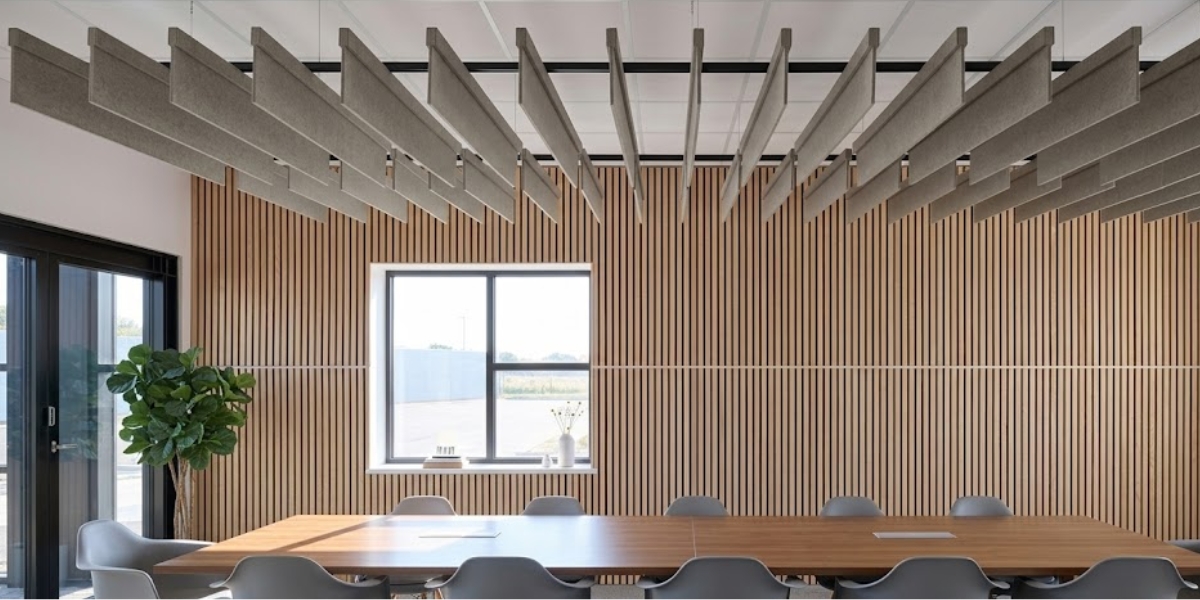
Ostrze akustyczne jest zazwyczaj smukłym liniowym elementem akustycznym wykonanym z filcu PET i zawieszonego za pomocą systemów przewodowych lub kablowych. W wielu projektach produkty ostrza są wykorzystywane jako poszczególne elementy akustyczne, chociaż niektórzy producenci umieszczają je również w szerszych liniowych systemach przegrody akustycznej. Każde ostrze działa niezależnie, co oznacza, że wydajność jest zlokalizowana w miejscu, w którym jest zainstalowana. Produkty takie jak Trublade i Aircore Blade z Focal Point reprezentują ten ostrze cienki, jednopanelowy i nieoświetlony. Produkty takie jak Trublade i Aircore Blade to produkty akustyczne w stylu ostrza wymienione w szerszej kategorii liniowych przegród akustycznych Focal Point. Odzwierciedla to, jak terminologia może się różnić w zależności od producentów i rodzin produktów. Focal Point opisuje Trublade jako smukłe, 9 mm grubości, dźwięk pochłaniający dźwięk, nieoświetlone ostrze akustyczne. Ten opis jest dokładny, a także mówi wszystko, co musisz wiedzieć. Jest cienki, pochłania dźwięk i nie zawiera oświetlenia.
Ponieważ produkty ostrza są powszechnie używane jako poszczególne elementy zawieszone, ich efekt akustyczny jest zwykle bardziej zlokalizowany w porównaniu z większymi skoordynowanymi układami przegrody.
Co mogą, a czego nie mogą zrobić ostrza akustyczne?
Poniższa tabela pokazuje rzeczywiste możliwości i ograniczenia ostrzy akustycznych w praktycznych warunkach projektowych.
| Co potrafi ostrze | Czego ostrze nie może zrobić |
| Pochłaniaj dźwięk o średniej częstotliwości lokalnie | Akustycznie traktuj pełne biuro na otwartym planie |
| Uzupełnij istniejący pułap akustyczny | Zapewnij pełną kontrolę akustyczną w dużych, otwartych środowiskach komercyjnych |
| Zapewnij podstawową kontrolę dźwięku w małych pomieszczeniach | Zapewnij dowolną formę oświetlenia |
| pracować jako punkt wyjścia budżetu | Osiągnij oceny NRC powyżej 0,7 |
| Zainstaluj szybko jako pojedyncze elementy | Kontrola pogłosu o niskiej częstotliwości |
Ostrza najlepiej sprawdzają się w małych pomieszczeniach, miejscach spotkań lub zlokalizowanych obszarach problemowych, w których skoncentrowane jest odbicie dźwięku. Mają również sens jako leczenie uzupełniające, gdy sufit ma już pewne właściwości akustyczne, ale wymaga poprawy. W projektach o ograniczonych budżetach mogą stanowić punkt wyjścia bez angażowania się w pełny system sufitowy.
Tam, gdzie nie należą, są duże otwarte przestrzenie z wysokimi sufitami i ciągłym hałasem. Próba rozwiązania problemu akustycznego otwartego biura za pomocą ostrzy jest jak próba usunięcia powodzi za pomocą jednego łyżki. Narzędzie jest ważne, ale skala jest całkowicie niedopasowana.
Systemy przegrody akustycznej: skoordynowane rozwiązania sufitowe akustyczne
Czym właściwie jest przegroda akustyczna?

Systemy przegrody akustycznej są powszechnie projektowane jako skoordynowane układy sufitowe z wieloma zawieszonymi elementami akustycznym ułożonymi na większej powierzchni sufitu, zawieszonymi w układzie strukturalnym na suficie. Panele te są zaprojektowane tak, aby współpracować jako kompletne rozwiązanie akustyczne. W większych projektach komercyjnych układy przegrody są często określane jako skoordynowane systemy sufitowe z planowanym odstępem, orientacją i pokryciem.
Oznacza to, że odstępy, orientacja, gęstość i układ są planowane jako część projektu. System jest instalowany jako skoordynowany projekt, a nie montowany kawałek po kawałku na miejscu. W standardowych przegrodach nie ma oświetlenia. Ich jedyną funkcją jest kontrola akustyczna w całej przestrzeni.
Dlaczego przegroda przewyższa Blade: Fizyka
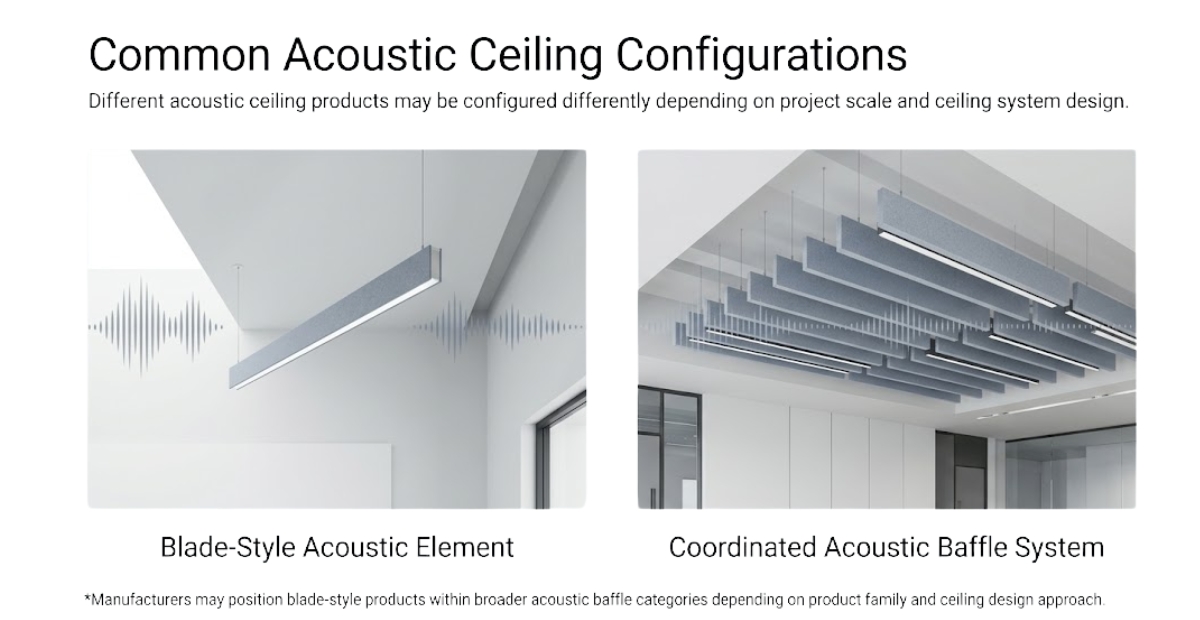
Różnica wydajności sprowadza się do tego, jak dźwięk porusza się w przestrzeni. W skoordynowanych układach przegrody fale dźwiękowe wchodzą w interakcję z wieloma zawieszonymi powierzchniami w poprzek objętości sufitu. Na ogół zapewnia to szersze pokrycie akustyczne w porównaniu z lokalizacją w stylu ostrza. Fale dźwiękowe poruszające się w różnych kierunkach są przechwytywane przez wiele powierzchni jednocześnie.
Badania O’Neilla Inżynierskie systemy pokazują, że w pomieszczeniach powyżej 10 000 stóp sześciennych obróbka sufitowa staje się niezbędna, ponieważ same panele ścienne nie zapewniają wystarczającej absorpcji. W przestrzeniach powyżej 15 000 stóp sześciennych przegrody sufitowe są często jedynym praktycznym rozwiązaniem. To nie jest preferencja projektowa. To jest fizyka.
Wartości NRC dla zintegrowanych systemów oświetlenia akustycznego działają inaczej niż w przypadku płaskich paneli ściennych — zrozumienie tego rozróżnienia ma znaczenie przed określeniem jakiegokolwiek oświetlonego produktu akustycznego.
Poniższa tabela porównuje wydajność akustyczną między ostrzami i przegrodami w mierzalnych warunkach.
| Zdolność akustyczna | Ostrze akustyczne | Przegroda akustyczna |
| Obszar pokrycia dźwięku | Pojedyncza strefa lokalna | Pełny obszar sufitu |
| Kierunek przechwytywania dźwięku | Tylko jedna twarz | wiele twarzy jednocześnie |
| przestrzenna jednolitość dźwięku | Nierówne, zlokalizowane spadki | Równomierny rozkład w przestrzeni |
| Zakres oceny NRC | 0,50 do 0,70 | 0,70 do 0,90 |
| Odpowiednia objętość | poniżej 5000 stóp sześciennych | 5000 stóp sześciennych i więcej |
Gdzie należą przegrody akustyczne i jak instalują
Przegrody należą do otwartych biur, restauracji, siłowni, obiektów przemysłowych i każdej przestrzeni komercyjnej z wysokimi sufitami, w których dźwięk musi być kontrolowany w całej głośności. Są to środowiska, w których przejrzystość mowy, redukcja szumów i komfort zależą od spójnej wydajności akustycznej.
Instalacja jest również zasadniczo inna. Systemy przegrody są instalowane przy użyciu grupowych podnośników lub systemów opartych na torze, umożliwiając wyrównanie i zawieszenie wielu paneli. Takie podejście jest szybsze, bardziej precyzyjne i daje czystszy wynik końcowy w porównaniu z pojedynczo zawieszanymi ostrzami. W skali ta wydajność zmniejsza zarówno czas pracy, jak i błędy wyrównania.
Chociaż produkty w stylu ostrza i systemy przegrody mogą wyglądać na podobne wizualnie, często są one określane w różny sposób w zależności od skali obróbki akustycznej, integracji oświetlenia i konstrukcji systemu sufitowego.
Akustyczne światło ostrza: gdy do cienkiego panelu dodaje się światło
Czym właściwie jest akustyczne światło ostrza?
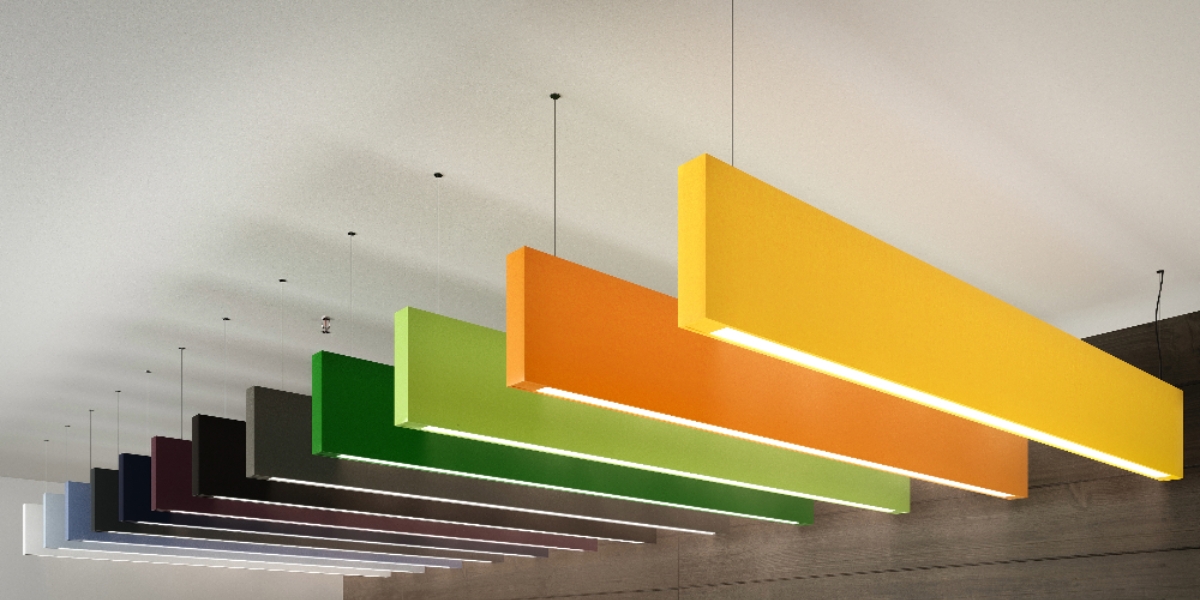
Akustyczne światło ostrza często wykorzystuje panele akustyczne Slim PET jako standardowe ostrze, ale dodaje element oświetleniowy. Oświetlenie to może być zamontowane na górze, przymocowane pod spodem lub częściowo osadzone w panelu. Elementy akustyczne i oświetleniowe to oddzielne komponenty połączone w jeden produkt.
Przykłady obejmują ostrze BAFL oświetlone przez Frasch, opisane jako tradycyjne ostrze zawierające wysokowydajne oprawy LED, oraz światło ostrza Luxxbox, sprzedawane jako ultraciekie oświetlenie liniowe i przegroda. Obaj podążają za tym samym pojęciem. Weź cienki panel akustyczny i dodaj do niego źródło światła.
Ograniczenie, które kupujący często odkrywają zbyt późno
Ograniczenie staje się jasne po instalacji. Ponieważ oświetlenie i elementy akustyczne nie są tworzone razem od samego początku, pojawiają się kompromisy w wydajności. Kontrola odblasków jest rzadko określana zgodnie z profesjonalnymi standardami. Rozkład światła może być nierównomierny. Moduł LED jest często traktowany jako dodatek, a nie jako podstawowa część systemu.
Konserwacja również staje się bardziej złożona. Jeśli światło nie ulegnie awarii, dostęp często wymaga usunięcia lub regulacji panelu akustycznego. Stwarza to przestoje i dodatkową pracę.
Blade Light działa w projektach, w których budżet jest napięty, a oczekiwania są umiarkowane. Pasuje do przestrzeni tymczasowych, środowisk o niskim natężeniu ruchu lub projektów na wczesnym etapie, w których pełna integracja nie jest możliwa.
Kluczowy wgląd jest prosty. Produkty Acoustic Blade Light zazwyczaj łączą smukłe panele akustyczne z dołączonymi lub zintegrowanymi komponentami o Produkty te są powszechnie stosowane w projektach, które wymagają prostszej integracji akustycznej i oświetlenia.
Akustyczne światło przegrody: kompletny zintegrowany system
Czym właściwie jest akustyczne światło przegrody
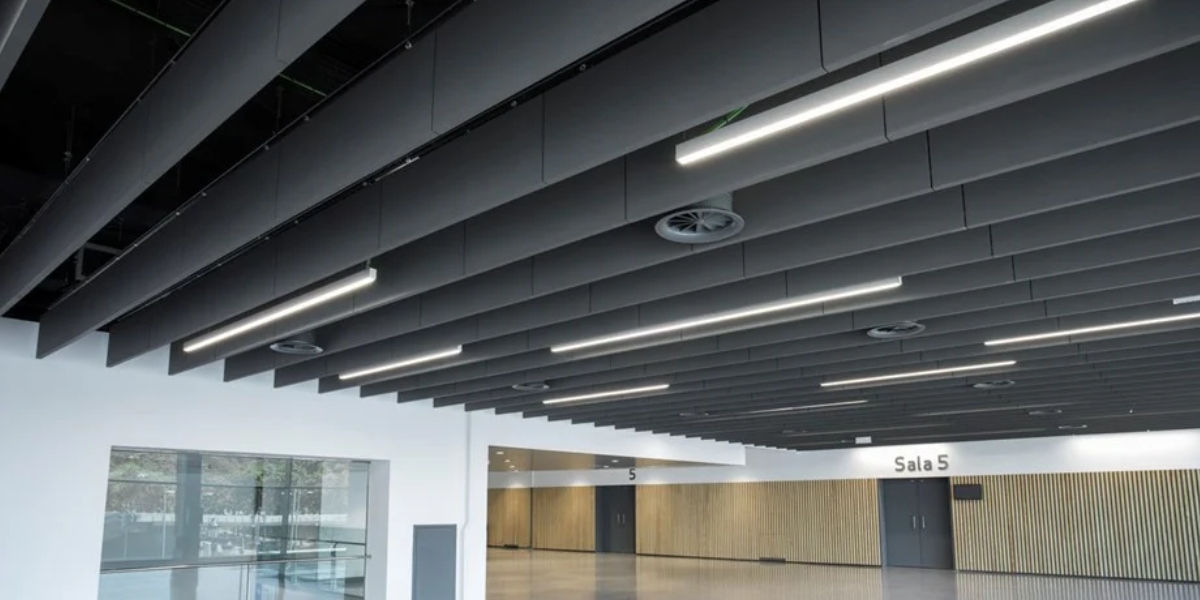
Akustyczne światło przegrody łączy grubą macierz przegrody z profesjonalnie zaprojektowanym oświetleniem LED od samego początku. W systemach oświetlenia przegrody akustycznej oświetlenie i struktura akustyczna są zazwyczaj projektowane razem jako część tego samego rozwiązania sufitowego. System oświetlenia jest zaprojektowany wokół struktury akustycznej lub struktura akustyczna jest zaprojektowana wokół systemu oświetlenia.
Focal Point jest zgodny z podejściem projektowym “Luminaire First”, zapewniając, że materiały akustyczne nigdy nie zostaną zagrożone. Produkty takie jak SEVER 2 Acoustic Direct odzwierciedlają to myślenie. Jednocześnie listwa dźwiękowa Arktura pokazuje, że zintegrowane systemy mogą osiągnąć oceny NRC do 1,15, co jest wyższe niż wiele nieoświetlonych przegród. To dowodzi, że integracja nie zmniejsza wydajności akustycznej, gdy jest wykonana poprawnie.
Dlaczego światło przegrody akustycznej działa inaczej niż światło ostrza
Różnica jest techniczna i mierzalna. W systemach oświetlenia przegrody obliczana jest kontrola olśnienia i określana. Rozkład światła jest zaprojektowany w całej geometrii układu przegrody. Poziomy wyjściowe są zgodne z komercyjnymi standardami oświetlenia.
Luxxbox Linea opisuje to jako wolumetryczne podejście do przegrody, w której pochłanianie dźwięku i wydajność oświetlenia są zaprojektowane razem. Stwarza to zarówno spójność akustyczną, jak i wizualną.
W szczególności dla biur, sprawa Łączenie obróbki akustycznej z oświetleniem w systemie pojedynczego sufitu jest silniejszy niż kiedykolwiek — a wyniki projektowe mówią same za siebie.
Poniższa tabela wyraźnie podkreśla różnice.
| Punkt specyfikacji | Akustyczne światło ostrza | Akustyczne światło przegrody |
| Ocena NRC | 0,50 do 0,70 | 0,70 do 0,90 i powyżej |
| Typ integracji LED | Dodany zewnętrzny lub dodany powierzchni | Zaprojektowany w systemie |
| Kontrola olśnienia (UGR) | Nie określono | profesjonalnie określony |
| Jednolitość światła | Nie obliczono | Obliczono dla przestrzeni |
| Wydajność akustyczna | Tylko średnia częstotliwość | Średnia i niska częstotliwość |
| Gwarancja systemowa | Oddzielne komponenty | Gwarancja na jeden system |
| Branże instalacyjne | Dwie oddzielne instalacje | Jeden zintegrowany system |
Sprawa biznesowa i projektowa do określania światła przegrody akustycznej
Z komercyjnego punktu widzenia, przegroda Light upraszcza wszystko. Jeden produkt zastępuje zarówno oprawę oświetleniową, jak i system akustyczny. Instalacja jest obsługiwana przez jeden skoordynowany proces zamiast oddzielnych transakcji. Ostatni sufit wygląda celowo, ponieważ jest zaprojektowany jako jeden system.
Poniższa tabela pokazuje różnicę w warunkach projektu.
| Rozważanie projektu | Oddzielna przegroda akustyczna plus oddzielna oprawa oświetleniowa | Akustyczne światło przegrody |
| Liczba produktów do źródła | 2 oddzielne produkty od 2 dostawców | 1 Zintegrowany system |
| Liczba transakcji instalacyjnych | Elektryczne i akustyczne oddziel | 1 Zintegrowana instalacja |
| Wynik wizualny sufitu | Dwa produkty widoczne obok siebie | Unified Sufit System |
| Dostęp do konserwacji | 2 oddzielne systemy do obsługi | 1 system do serwisu |
| Koordynacja projektowa wymagana | Wysoka, wymagana wyrównanie | Brak, pojedynczy produkt |
| Porównanie cen według klienta | Łatwe do porównania komponenty | Ceny systemu |
Poniższa tabela odzwierciedla rzeczywistość komercyjną każdego produktu z perspektywy dostawcy i specyfikatora.
| fabrykat | Typowa marża brutto | Porównanie cen według klienta |
| Ostrze akustyczne | 15 do 25 proc. | Bardzo proste — podstawowe ceny materiałów |
| Przegroda akustyczna | 25 do 40 proc. | Umiarkowane — ceny systemu |
| Akustyczne światło ostrza | 20 do 35 proc. | Dość proste — wycena komponentów |
| Akustyczne światło przegrody | 35 do 60 procent | Trudne — zintegrowane ceny systemu |
Zalety osi czasu i koordynacji zintegrowanych systemów nie są teoretyczne. Ostatnie studium przypadku pokazuje, jak Kompletny projekt na wisior akustyczny został dostarczony i zainstalowany w ciągu siedmiu dni.
Wgląd tutaj jest jasny. Gdy projekt wymaga wydajności akustycznej, jakości oświetlenia i spójnego projektu, akustyczne światło przegrody jest jedyną kategorią, która zapewnia wszystkie trzy razem.
Wszystkie cztery porównane produkty: kompletna tabela referencyjna
Ta tabela jest przeznaczona do rzeczywistego użytku projektowego. Wprowadza każdy kluczowy czynnik decyzyjny w jedno miejsce, aby zespoły mogły się szybko wyrównać.
| Punkt specyfikacji | Ostrze akustyczne | Przegroda akustyczna | Akustyczne światło ostrza | Akustyczne światło przegrody |
| Oświetlenie w zestawie | żaden | żaden | LED zewnętrzna lub dodana powierzchniowo | Profesjonalnie zintegrowana dio |
| Ocena NRC | 0,50 do 0,70 | 0,70 do 0,90 | 0,50 do 0,70 | 0,70 do 0,90 i powyżej |
| Pokrycie dźwięku | Tylko strefa lokalna | Pełny obszar sufitu | Tylko strefa lokalna | Pełny obszar sufitu |
| Kontrola olśnienia (UGR) | Nie dotyczy | Nie dotyczy | Nie określono | profesjonalnie określony |
| Pozycjonowanie branżowe | Smukły liniowy element akus | Szersza kategoria systemów sufitowych akustycznych | Element akustyczny w stylu ostrza z oświetleniem | Zintegrowany system akustyczny + oświetlenie sufitowe |
| Metoda instalacji | Zawieszenie indywidualne | System tablicy grupowej | Indywidualny z lekkim montażem | System modułowy |
| Wspólne użycie projektu | Mały uzupełniający | Duża otwarta reklama | Budżet z potrzebą światła | Pełna specyfikacja handlowa |
| Typowa cena fabryczna | $3.5 do $12 na m2 | $10 do $25 na m2 | $80 do $180 na zestaw | $150 do $400 na zestaw i powyżej |
| konfigurowalność | Ograniczone — tylko standardowe rozmiary | Umiarkowane — regulowany układ tablicy i odstępy | Umiarkowane — rozmiar panelu i pozycja światła | Wysokie — kolory, rozmiary, konfiguracje i układy |
| Gwarancja LED | Nie dotyczy | Nie dotyczy | 5 lat led / 1 rok filc | 5 lat led / 1 rok filc |
| Typowy typ klienta | Podstawowy nabywca z minimalnymi wymagania | Firmy inżynieryjne i projektowe | Mali klienci z ograniczeniami budżetowymi | Projektowanie i inżynieria klientów w projektach komercyjnych |
| Zalecany do promocji | Nie główny | Tak dla dużych przestrzeni | Nie główny | Tak Podstawowy Produkt |
Którego produktu faktycznie potrzebuje Twój projekt: Ścieżka decyzyjna
Większość błędów ma miejsce, gdy kupujący opisuje problem ogólnie i zostaje dopasowany do dowolnego produktu dostępnego przez dostawcę. Ustrukturyzowana ścieżka decyzyjna usuwa to ryzyko.
| Sytuacja projektu | Rzeczywista potrzeba akus | Właściwy produkt |
| Mała sala konferencyjna, zlokalizowane echo | Uzupełniające wchłanianie miejsc | Ostrze akustyczne |
| Otwarte biuro powyżej 5000 stóp sześciennych | System akustyczny z pełnym sufitem | Przegroda akustyczna |
| Przestrzeń z istniejącym oświetleniem | Tylko akustyczne | Ostrze akustyczne lub przegroda |
| Projekt budżetowy wymagający światła | Integracja na poziomie podstawowym | Akustyczne światło ostrza |
| Komercyjny projekt z naciskiem na projekt | Pełny zintegrowany system | Akustyczne światło przegrody |
| Projekt oparty na niestandardowym projekcie | Integracja o wysokiej specyfikacji | Przegroda akustyczna Światło niestandardowe |
Projekty często ewoluują. Kupujący, którzy zaczynają od ostrzy, zdają sobie sprawę, że potrzebują szerszego zasięgu. Następnym krokiem staje się system przegród. Ci, którzy zaczynają od światła ostrza, często uważają, że oświetlenie jest niewystarczające i przechodzą w kierunku zintegrowanych systemów. Wczesne zrozumienie tego postępu zapobiega późniejszym kosztownym zmianom i prawidłowo ustawia specyfikację od samego początku.
Niestandardowe specyfikacje są bardziej powszechne niż oczekują kupujący — jeden z ostatnich projektów zaczęło się od niczego więcej niż zdjęcie referencyjne z wystawy i zaowocowało w pełni zainstalowanym rozwiązaniem sufitowym akustycznym.
Dlaczego materiał filcowy dla zwierząt ma znaczenie we wszystkich czterech typach produktów
Wszystkie cztery typy produktów wykorzystują filc PET z poliestru PET jako główny materiał akustyczny. Materiał ten jest spójny na różnych ostrzach, przegrodach i zintegrowanych systemach oświetleniowych. Można go czyścić za pomocą odkurzania, wspiera czyszczenie rozcieńczonego wybielacza w kontrolowanych środowiskach i zazwyczaj zawiera od 50 do 60 procent zawartości pochodzące z recyklingu. Spełnia certyfikaty GreenGuard Gold i klasy A klasy A. Właściwości te mają zastosowanie niezależnie od tego, czy panel jest cienki czy gruby, oświetlony czy nieoświetlony.
Różnica w wydajności nie dotyczy materiału. Chodzi o strukturę. Grubszy panel w połączeniu z trójwymiarową aranżacją tworzy większą powierzchnię dla pochłaniania dźwięku. Dlatego przegrody przewyższają ostrza. Dlatego też zintegrowane oświetlenie przegrody może utrzymać wysokie oceny NRC. Dioda LED nie zastępuje materiału akustycznego. Jest w nim zaprojektowana.
Kluczowe przesunięcie jest proste. Materiał pozostaje taki sam. Struktura jest tym, co wszystko zmienia.
wnioskowanie
Produkty Acoustic Blade są powszechnie używane jako smukłe zawieszone elementy akustyczne do zlokalizowanej kontroli dźwięku. Systemy przegrody akustycznej są powszechnie określane w większych środowiskach komercyjnych wymagających szerszego pokrycia akustycznego. Acoustic Blade Light to cienki panel z dodatkowym źródłem światła, odpowiedni do projektów budżetowych. Acoustic Baffle Light to w pełni zintegrowany system, który łączy akustykę, oświetlenie i projekt w jednym rozwiązaniu.
Każdy produkt ma swoje miejsce. Ostrza należą do małych lub uzupełniających aplikacji. Przegrody należą do dużych środowisk komercyjnych z prawdziwymi wyzwaniami akustycznymi. Blade Light pasuje do projektów, w których budżet ogranicza pełną integrację. Baffle Light pasuje do projektów, w których zarówno wydajność, jak i projekt mają znaczenie.
Jeśli określasz projekt i potrzebujesz potwierdzonych danych NRC, obliczeń Sabin lub wskazówek dotyczących instalacji, skontaktuj się bezpośrednio z FeltLite z wymiarami pomieszczenia i wysokością sufitu. Ta informacja zamienia wybór produktu w prawidłowe rozwiązanie.