 Polski
  English
  简体中文
简体中文  Deutsch
  Español
  Français
  Italiano
  日本語
日本語  한국어
한국어  Português
  Русский
  Türkçe
  Nederlands
  ไทย
ไทย  Tiếng Việt
Oświetlenie akustyczne nie ma oceny NRC, ponieważ NRC jest metryką powierzchni 2D, podczas gdy oświetlenie jest systemem przestrzennym 3D. To jest fundamentalne rozdźwięki w dzisiejszym przemyśle. Wielu architektów i projektantów prosi o wartość NRC, ponieważ jest to znany punkt odniesienia, ale zastosowanie go do zawieszonej oprawy oświetleniowej jest technicznie błędem kategorii.
Podczas gdy płaska płyta sufitowa lub panel ścienny pokrywają ustalony obszar, światło akustyczne jest obiektem rozmieszczonym. Współdziała z dźwiękiem ze wszystkich kątów, w tym z jego krawędziami i tyłem, czego nie może uwzględnić pomiar płaskiej powierzchni.
Na koniec w tym artykule wyjaśnimy, dlaczego przejście z NRC na metryki na poziomie systemu, takie jak RT60, jest kluczem do projektowania funkcjonalnych nowoczesnych przestrzeni roboczych, które naprawdę brzmią tak dobrze, jak wyglądają.
Co to jest oświetlenie akustyczne?
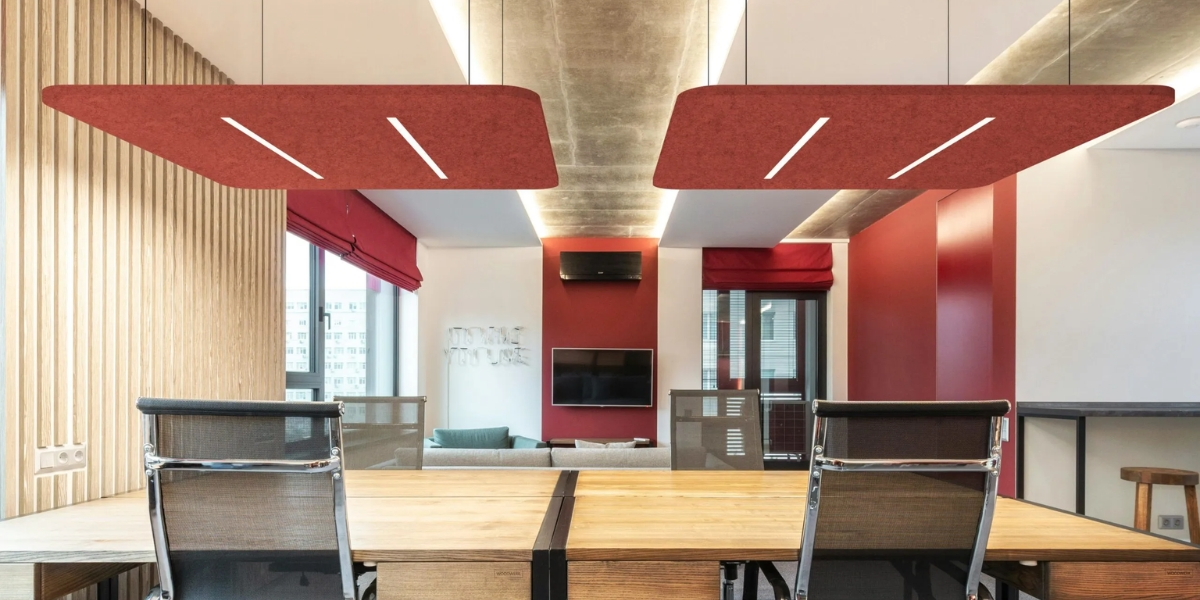
Oświetlenie akustyczne to zintegrowane rozwiązanie, które łączy oświetlenie LED i materiały dźwiękochłonne, aby poprawić zarówno oświetlenie, jak i komfort akustyczny w przestrzeni. Stanowi to przejście od postrzegania oświetlenia jako zwykłego narzędzia do postrzegania go jako istotnej części zdrowia środowiskowego pomieszczenia.
Charakterystyka rdzeni
W tej tabeli definiuje się zasadnicze DNA systemu oświetlenia akustycznego:
| uwydatnia | Specyfikacja techniczna |
| osobisty | 100% filc PET nadający się do recyklingu (grubość 9mm – 12mm) |
| Obszar absorpcji | Powierzchnia odsłonięta 360° (montaż typu J) |
| Zakres widmowy | 250 Hz - 2000 Hz (zakres głosu ludzkiego) |
| Ocena ogniowa | ASTM E84 klasa A / EN 13501-1 |
| strujka świetl | Silniki LED 90+ CRI |
Przesunięcie myślenia: od warstw do systemów
W tradycyjnym designie dodaliśmy warstwy — najpierw światła, a następnie panele akustyczne jako refleksja. Oświetlenie akustyczne to tzw. System integracji przestrzennej.
W przeciwieństwie do tradycyjnego oświetlenia, które tworzy odblaskowe powierzchnie, w których dźwięk wraca do pomieszczenia, oświetlenie akustyczne wykorzystuje Objętość 3D przestrzeni. Ponieważ te oprawy są zazwyczaj zawieszone, przechwytują fale dźwiękowe, gdy poruszają się w kierunku sufitu i zanim będą mogły odbić się z powrotem.
Oświetlenie akustyczne a oświetlenie tradycyjne
Aby zrozumieć propozycję wartości, musimy porównać oba systemy pod kątem inżynierii i czynników projektowych:
| Współczynnik wydajności | Oświetlenie akustyczne (Feltlite) | Tradycyjne oświetlenie | Logika myślenia |
| Pochłanianie dźwięk | 0,75 – 1,2 sabin na jednostkę | < 0,05 Sabins (odbicie) | Światła stają się nićmi dla energii dźwięku. |
| Wpływ na RT60 | Aktywna redukcja (0,2s – 0,5 s spadek) | Neutralny lub negatywny | Zmniejsza zapotrzebowanie na dodatkowe panele ścienne. |
| montaż | Zintegrowany jednopunktowy | Wielopunktowy (elektryczny + akustyczny) | Zmniejsza koszty pracy i bałagan w suficie. |
| Powierzchnia Natura | dyfuzyjny i absorpcyjny | Twardy i odblaskowy | Zapobiegaj echu w otwartych biurach. |
Nauka o felt:
Fizyka tych systemów opiera się na materiale filcowym PET, który przekształca energię dźwięku w śladowe ilości ciepła poprzez tarcie. Ponieważ światło jest zawieszone w polu dźwiękowym, oddziałuje ze znacznie większą liczbą cząsteczek powietrza niż płaski panel schowany na ścianie, co czyni go bardziej wydajnym narzędziem do kontroli pogłosu. Gdy odchodzimy od fragmentarycznych układów biurowych, staje się jasne Dlaczego oświetlenie akustyczne to przyszłość nowoczesnego designu biurowego, to jedyne rozwiązanie, które jednocześnie zajmuje się zarówno ergonomią wizualną, jak i słuchową.
Co to jest NRK?
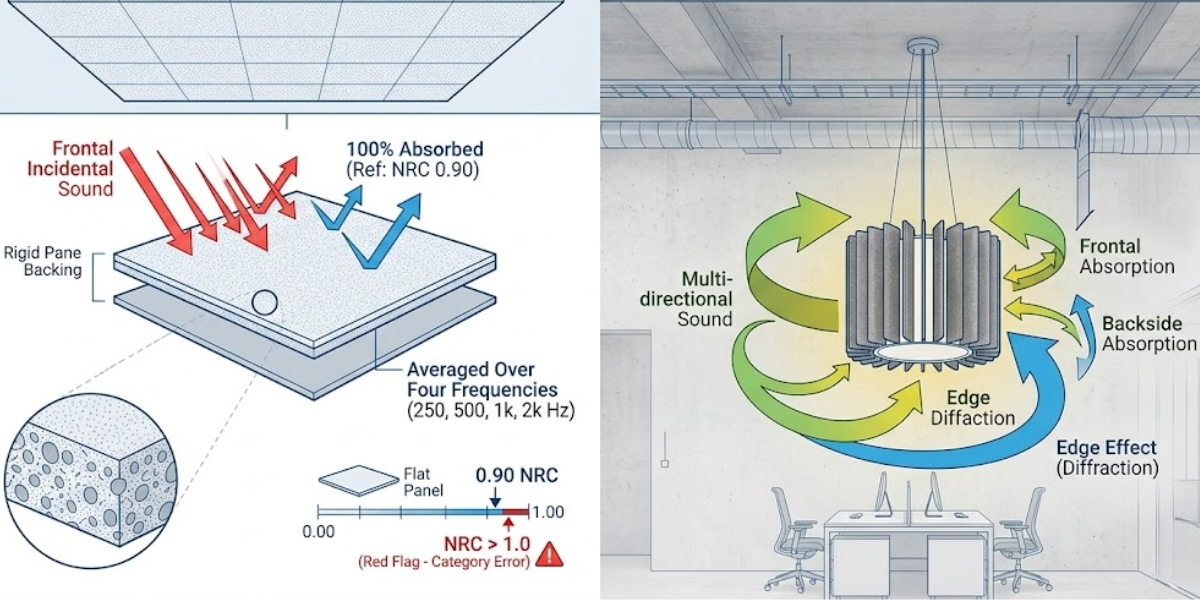
NRK, lub Współczynnik redukcji szu, to ocena jednocyfrowa, która reprezentuje średnią pochłanianie dźwięku przez materiał. Według ASTM C423 Standardowo oblicza się ją uśredniając współczynniki absorpcji przy czterech częstotliwościach średnich zakresów: 250, 500, 1000 i 2000 Hz.
Techniczna rzeczywistość NRC
Oceny NRC są często uproszczone. Aby zrozumieć, jak materiał faktycznie działa w biurze o dużym natężeniu ruchu, musimy przyjrzeć się procentowi pochłoniętej energii dźwięku i jak wpływa na prywatność mowy.
| Wartość NRC | Pochłaniana energia dźwięku | Kategoria wydajności akustycznej | Aplikacja i wpływ na rzeczywistą |
| 0,00 – 0,10 | 0% – 10% | Wysoce odblaskowy | Beton, szkło, marmur. Powoduje maksymalne echo; dźwięk odbija się w nieskończoność. |
| 0,20 – 0,40 | 20% – 40% | Częściowy dyfuzor | Cienkie dywany, standardowa płyta gipsowo-kartonowa Minimalny wpływ na RT60; dźwięk pozostaje surowy. |
| 0,50 – 0,70 | 50% – 70% | Absorber standardowy | Standardowe panele akustyczne 1/2. Dobre dla ogólnego hałasu, ale mowa może nadal się nakładać. |
| 0,80 – 0,95 | 80% – 95% | Wysoka wydajność | Filc o dużej gęstości (Feltlite). Znacznie spada RT60; idealny do skupionych stref roboczych. |
| 1.00+ | 100%+ | Okno Open (Obiekt odstępne) | Odpowiednik dźwięku opuszczającego pokój. Wartości >1,0 wskazują dyfrakcję 3D (efekt krawędzi). |
Chociaż te oceny dają nam podstawę do potencjału materialnego, nie uwzględniają fizycznej geometrii instalacji
Paradoks ekwipunku: dlaczego traktujemy oświetlenie akustyczne jako atut, a nie wykładzinę podłogową
Jednym z najbardziej trwałych błędów w zakupach architektonicznych jest próba zakupu obiektu 3D za pomocą matematyki 2D. Aby to zilustrować, zastanów się, w jaki sposób kategoryzujemy zasoby biurowe:
- Powierzchnie ciągłe (podłoga): Kupując dywan, kupujesz za stopę kwadratową. Jest to materiał od granicy do granicy. NRC został zbudowany dla tej logiki podłoża.
- Dyskretne obiekty (meble): Kiedy kupujesz krzesło do zadań, żaden architekt nie prosi o thrown na metr kwadratowy poduszki siedzenia. Krzesło kupujesz jako jednostka Ponieważ jego wydajność zależy od objętości 3D, jej kształtu i miejsca, w którym jest umieszczony w pomieszczeniu.
Rozłączenie: Światło akustyczne to zasób akustyczny klasy amurani. Narzucając mu ocenę NRC, zasadniczo staramy się zmierzyć krzesło jak na dywan. Powoduje to matematyczne halucynacje, które widzimy w wielu raportach laboratoryjnych, w których wartości NRC przekraczają 1,0. W Feltlite zachęcamy do odejścia od tego sposobu myślenia tylko nawierzchniowego i zamiast tego mierzymy Całkowity wkład Sabina na jednostkę.
Niemożliwa ocena: dlaczego NRC powyżej 1.0 jest błędem pomiaru
Możesz zobaczyć niektóre produkty zgłoszące NRC 1,10 lub 1,20. Fizyka mówi nam, że nie możesz pochłonąć więcej niż 100% uderzającego w ciebie dźwięku. Jak to możliwe?
To się nazywa tzw.efekt krawędzi lub dyfrakcja. Kiedy fale dźwiękowe uderzają o krawędzie grubego, zawieszonego obiektu, zginają się wokół niego. W teście laboratoryjnym (montaż typu J) te dodatkowe fale są pochłaniane, ale formuła matematyczna stosowana dla NRC nie zdaje sobie sprawy, że obiekt ma krawędzie – uważa, że jest to płaska płaszczyzna. Powoduje to błąd obliczeniowy, który daje wynik wyższy niż 1,0. Nie oznacza to, że materiał jest super-chłonny; oznacza, że metryka NRC jest używana na niewłaściwym typie produktu.
NRC powyżej 1.0 jest matematyczną niemożliwością w fizyce 2D. Wskazuje to po prostu, że ‘efekt krawędzi’ jest w grze, gdzie dźwięk ulega dyfrakcji wokół zawieszonego obiektu, co dowodzi, że metryki 2D są niewłaściwym narzędziem do oświetlenia 3D.
Dlaczego standardy 2D zawiodły obiekty 3D
Powszechnym błędem jest przekonanie, że NRC może być używany do każdego produktu, który pochłania dźwięk. Jednak według Standard ASTM C423, metryka NRC ma ścisłe warunki brzegowe:
- Płaskie powierzchnie: NRC został matematycznie zaprojektowany dla płaszczyzn 2D (sufity i ściany). Zakłada, że materiał jest równo z powierzchnią.
- Ciągły zasięg: Obliczenie zakłada, że materiał jest ułożony w ciągłym, nieprzerwanym obszarze.
Dlaczego to ma znaczenie dla Feltlite:
Oświetlenie akustyczne składa się zobiekty rozmieszczone. Są 3D, zawieszone i mają między sobą luki. Kiedy zastosujesz metrykę 2D (NRC) do obiektu 3D, matematyka skutecznie się łamie, co prowadzi do nielogicznych lub zawyżonych wartości (takich jak NRC 1.20), które omówiliśmy wcześniej.
| uwydatnia | Wymagania NRC | Oświetlenie akustyczne rzeczywistość |
| geometria | Płaska / 2d płaszczyzna | Złożony kształt 3d |
| zasięg stacji nadaw | Ciągły / nieprzerwany | Rozmieszczone / rozłożone |
| ścieżka dźwiękowa | Pojedyncza strona (przód) | 360 stopni (przód, tył, krawędzie) |
| Status ASTM | Dotyczy płytek/panel | Zabronione dla obiektów rozmieszczonych |
Co to jest RT60?
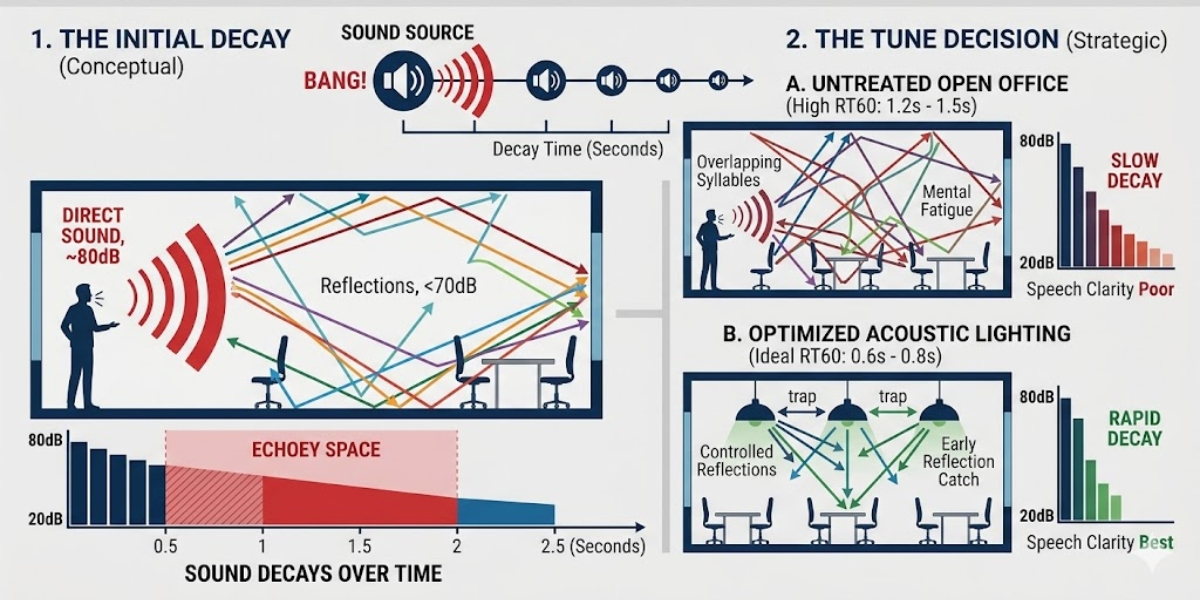
RT60 to rzeczywista rzeczywistość pokoju. Mierzy czas (w sekundach) dźwięku, który rozpada się o 60 decybeli. W przestrzeniach roboczych 2026 nie tylko pochłaniamy dźwięk; dostrajamy ten rozpad, aby osiągnąć spokojny cel 0,7s
W nowoczesnym biurze celem nie jest tylko pochłanianie dźwięku – to kontrolowanie rozkładu, aby mowa pozostała zrozumiała, a otoczenie było spokojne. To tutaj jest Równanie Wallace'a Sabine'a staje się krytyczne:
RT60 = 0,049 V/A
Gdzie:
- V = Całkowita objętość pokoju (stopy sześcienne).
- a = Całkowita absorpcja w pomieszczeniu (mierzona w Sabins).
Ta formuła dowodzi, że akustyka to nie magia, to matematyka. Jeśli zwiększysz absorpcję (a) poprzez dodanie oświetlenia akustycznego, wartość RT60 naturalnie spadnie, tworząc bardziej produktywną przestrzeń.
Wartości docelowe RT60: Standard dla przestrzeni roboczych 2026
| Typ spacji | Idealny zakres RT60 | Dlaczego ten cel ma znaczenie? |
| Biuro (Open Plan) | 0,5 – 0,8 sek | Równoważy prywatność mowy z komfortem akustycznym. |
| sala konferencyj | 0,4 – 0,6 s | Maksymalna przejrzystość mowy dla połączeń wideo i współpracy. |
| klasa | 0,5 – 0,7 sek | Zapewnia, że głos nauczyciela dociera do tyłu bez rozmycia. |
| restauracja | 0,8 – 1,2 sek | Pozwala na energię i atmosferę bez ogłuszającego hałasu. |
| hol | 1,5 – 2,5 sek | Zoptymalizowany pod kątem muzyki i dystrybucji dźwięku na dużą skalę. |
Dlaczego RT60 jest krytycznym wskaźnikiem:
- Przejrzystość mowy W środowisku o wysokim poziomie RT60 sylaby nakładają się na siebie, co utrudnia zrozumienie kolegów z drużyny.
- Komfort hałasu: Kontrolowanie rozpadu zapobiega efektowi lombardowego (gdzie wszyscy mówią głośniej, aby być słyszeni).
- Wydajność: Wysoki pogłos powoduje zmęczenie psychiczne i zmniejsza koncentrację nawet o 66%
Od potencjału materialnego do rzeczywistości przestrzennej: przeniesienie uwagi na RT60
Wielu profesjonalistów używa tych terminów zamiennie, ale pełnią one różne role w procesie inżynieryjnym.
| pośrednik | NRC (metryka materialna) | RT60 (metryczne przestrzenne) |
| Co to mierzy | Absorpcja określonej powierzchni. | Całkowite zachowanie dźwiękowe w pokoju 3D. |
| Jednostka miary | 0,0 do 1,0 (wartość) | sekundy (czas) |
| resort | Lokalny: Jak dobry jest ten materiał? | Global: Jak dobrze czuje się ten pokój? |
| Dokładność oświetlenia | Niski: nie uwzględnia odstępów. | HIGH: mierzy rzeczywistą wydajność. |
Chociaż NRC daje nam linię bazową dla potencjału materialnego, jest to pomiar statyczny. Aby zrozumieć, jak naprawdę czuje się pokój, musimy przejść od ocen materialnych do rzeczywistości opartej na czasie: RT60.
Proste zrozumienie:
- NRC jest jak HP silnika — mówi ci o potencjale.
- Rt60 Jest jak czas 0-60 mph - mówi ci, jak samochód faktycznie działa na drodze.
Dlaczego NRC nie ma zastosowania do oświetlenia akustycznego
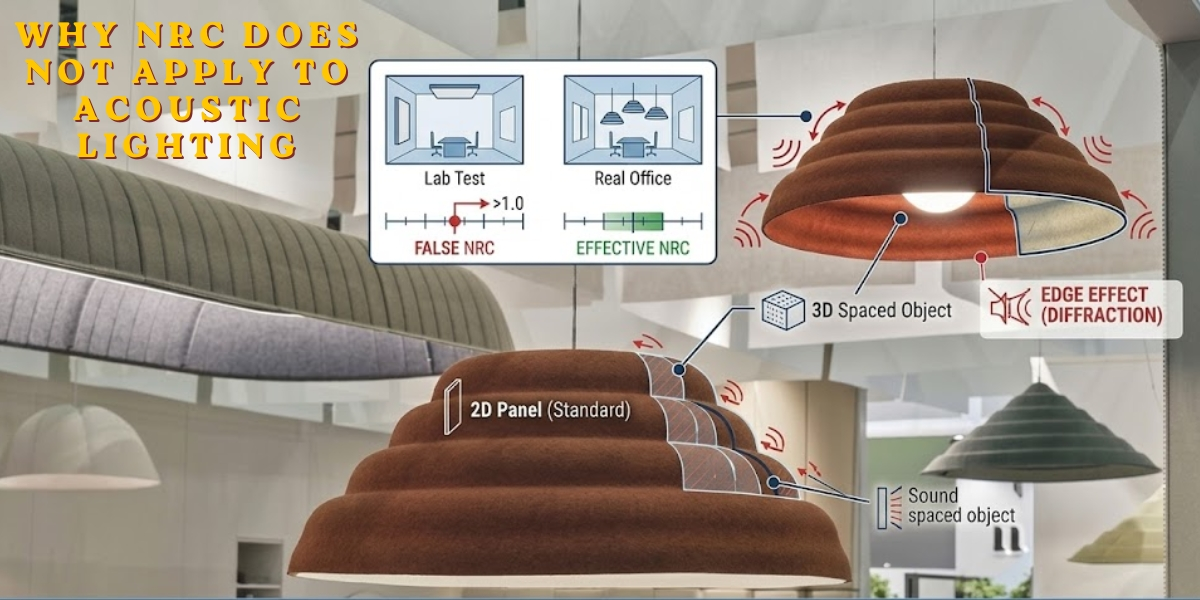
Oświetlenie akustyczne jest nie ciągła powierzchnia, przyjmując założenia 2D NRC matematycznie niezgodne z zawieszonymi obiektami 3D.
Tabela porównawcza technicznego
Pomiary NRC wymagają montażu standardowego (typ A), który zakłada, że materiał jest równo z ścianą lub sufitem. Oświetlenie akustyczne łamie każdą zasadę tego standardu.
| uwarunkować | Wymagania standardowe NRC | Oświetlenie akustyczne rzeczywistość |
| Typ powierzchni | Płaski, 2d płaszczyzna | Złożony, 3d obiekt rozmieszczony |
| zasięg stacji nadaw | Ciągły (od krawędzi do krawędzi) | Rozproszone (luki i wzory) |
| Kierunek dźwięku | Pojedynczy kierunek (przód) | Wielokierunkowy (omniochłonny) |
| Ważność pomiaru | Dotyczy płytek sufitowych | Nieprawidłowe ( prowadzi do wartości zawyżonych/fałszywych) |
Kluczowy wgląd
Oświetlenie akustyczne działa jak System rozproszony W przestrzeni, a nie jako materiał powierzchniowy. Oczekiwanie oceny NRC dla zawieszonego światła jest jak próba zmierzenia kwadratowego materiału chmury — metryka po prostu nie uwzględnia fizyki obiektu.
Rozkład strategiczny: unikanie cieni akustycznych poprzez odstępy
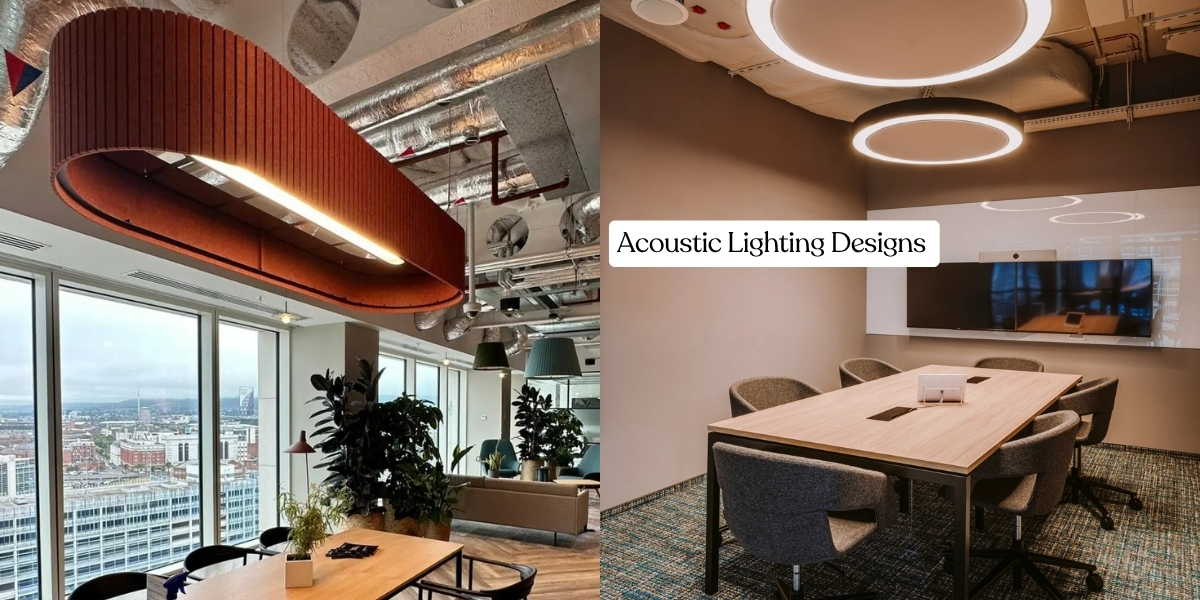
projektowanie w akustyce to znacznie więcej niż estetyka; to sztuka Rozkład przestrzenny. Jeśli zbierzesz wszystkie swoje światła akustyczne w jednym rogu, stworzysz akustyczno-oazę, podczas gdy reszta pomieszczenia pozostaje komorą echa. Aby zaprojektować obszar roboczy o wysokiej wydajności, musimy najpierw zdefiniować nasze cele, zanim obliczymy nasze miejsca docelowe.
Definiowanie celów projektowych
Nie tylko instalujemy światła, rozwiązujemy problemy środowiskowe. Każde oprawy dodane do sufitu muszą służyć dwóm celom, spełniając zarówno potrzeby oświetleniowe, jak i akustyczne bez uszczerbku.
| gol | opis | Logika myślenia |
| Zmniejsz RT60 | Kontroluj czas zaniku dźwięku. | Nie dążymy do ‘martwego’ pokoju; dostrajamy rozpad do 0,7s, aby zapewnić naturalną przejrzystość mowy bez zmęczenia psychicznego komory echa. |
| Utrzymaj oświetlenie | Zapewnij jasność bez olśnienia. | Filc o wysokiej gęstości może blokować światło. Obliczamy rozmieszczenie, aby zapewnić spójne 300-500 luksów na każdym biurku. |
| Ulepsz projekt | Integracja estetyczna. | Wykorzystanie oprawy jako przegrody 3D pozwala nam ukryć złożoną akustykę na widoku. |
Nauka o cieniowaniu akustycznym
Powszechnym błędnym przekonaniem wśród architektów jest błąd ilościowy — przekonanie, że samo zwiększenie ilości filcowego materiału liniowo poprawia jakość dźwięku. W rzeczywistości, Strategiczne rozmieszczenie jest o wiele bardziej krytyczne niż objętość surowca.
Fale dźwiękowe zachowują się jak płyny; przeciekają przez szczeliny w projekcie. Jeśli oprawy akustyczne są rozmieszczone zbyt daleko od siebie, tworzyszCień akustyczny. Dzieje się tak, gdy fale dźwiękowe całkowicie omijają zawieszone absorbery, uderzając w twardy, odbijający sufit konstrukcyjny i odbijając się z powrotem do przestrzeni roboczej, zanim oświetlenie będzie je przechwycić.
Aby zapobiecEfekt kręgielni—Gdzie dźwięk porusza się poziomo w otwartym biurze bez przeszkód — musimy zaprojektować układ za pomocą dwóch krytycznych wskaźników:
- Stosunek odstępu 1:1: Aby wyeliminować cienie akustyczne, odległość między oprawami nie powinna przekraczać ich wysokości zawieszenia od sufitu.
- Dyfrakcja krawędzi: Wykorzystując pionowe krawędzie świateł akustycznych 3D, przełamujemy fale dźwiękowe, rozpraszając je w filcowym materiale, zamiast pozwalać im odbijać od płaskich powierzchni.
Kluczowe czynniki projektowe
Po ustaleniu celów używamy tych czterech dźwigni do dostrojenia pokoju. To tutaj fizyczna instalacja spotyka się z matematyką akustyczną.
| pośrednik | Wpływ techniczny | Wgląd ekspertów |
| Pokrycie sufitowe | Bezpośrednio wpływa na wchłanianie. | Celujemy w zasięg 30–50%. Mniej niż 20% jest czysto dekoracyjny; ponad 60% jest często przeinwestowanie. |
| Odstęp między osprzętem | Steruje dystrybucją dźwięku. | Fale dźwiękowe zachowują się jak woda. Używamy przełożenia 1:1 (rozstaw w funkcji zawieszenia), aby zapobiec wyciekom dźwięku. |
| Wysokość zawieszenia | Wpływa na interakcję fal. | Strategia szczeliny powietrznej: wiszące oprawy 18-24 w dół umożliwiają uderzenie dźwięku w tył filcu, podwajając obszar absorpcji. |
| Wzór układu | Wpływa na jednolitość. | Do pracy z fokusem najlepiej nadaje się jednolita siatka, podczas gdy klastry są używane do tworzenia portów dźwiękowych nad strefami współpracy. |
Jak mierzyć wydajność oświetlenia akustycznego
Największą przeszkodą w naszej branży jest użycie niewłaściwej linijki do pomiaru systemu 3D. Jeśli używasz metryki 2D do pomiaru instalacji przestrzennej, Twoje dane będą zasadniczo wadliwe. Aby uzyskać dokładny obraz wydajności, musimy odejść od ocen materialnych i skupić się na Wyniki systemu.
Czego nie używać (pułapka NRC)
Wielu architektów nadal prosi o ocenę NRC dla zawieszonych urządzeń. Oto dlaczego te dane są mylące:
| systematyka | Dlaczego nie świeci się w oświetleniu | Logika myślenia |
| Standardowy NRC | Nie dotyczy | ASTM C423 wymaga ciągłej płaskiej powierzchni. Oświetlenie jest rozstawione i modułowe. |
| Ocena pojedynczego panelu | zwodniczy | Pomiar jednego filcu w laboratorium ignoruje efekt ostrza i luki w prawdziwej instalacji. |
Rzeczywistość: Używanie NRC do oświetlenia jest jak pomiar kwadratowego materiału wentylatora sufitowego, aby zobaczyć, ile powietrza porusza. To zły wymiar.
Czego użyć (weryfikacja 3-słupowa)
Aby zapewnić klientowi gwarancję wydajności, używamy trzech konkretnych wskaźników, które uwzględniają metodę C i fizykę w świecie rzeczywistym.
1. Redukcja RT60 (wynik)
Ostatecznym testem jest to, ile czasu zgolimy z echa.
- Wstępna instalacja: 1,2 sek (typowe biuro echoey).
- Po zainstalowaniu: 0,7 sek (cel feltlite).
- Ulepszenie: Redukcja o 0,5 sekundy. Jest to ogromna zmiana w ludzkim komforcie, której NRC nie może przewidzieć.
2 Współczynnik pokrycia i metoda C (płaszczyzna urojona)
Zamiast mierzyć powierzchnię filcu, używamy Metoda C. DefiniujemyWyimaginowana płaszczyzna pozioma przez sufit.
- Cel: 30% – 50% Efektywne pokrycie całkowitej powierzchni sufitu.
- Dlaczego to działa: To odpowiada za pustą przestrzeń między światłami, dając architektowi realistyczny pozorny NRC, któremu mogą zaufać.
3. Całkowite Sabins (liczba absorpcji)
Sabin to dosłowna jednostka doskonałej absorpcji. Zamiast procentu obliczamy Całkowita Sabins dodane do pokoju.
| parametr | znaczący | Obliczenia eksperta |
| Całkowita Sabins | Całkowita pochłonięta energia dźwięku. | (Liczba urządzeń) x (wchłanianie na jednostkę) = całkowity wpływ pomieszczenia. |
| Logika umieszczania | Gdzie mieszkają Sabinowie. | Absorpcja jest 2 razy bardziej efektywna, gdy znajduje się bezpośrednio nad źródłem dźwięku (biurkiem). |
Rozwiązania akustyczne biurowe (dlaczego zintegrowane jest najlepiej)
Wiele biur próbuje rozwiązać problemy z hałasem przy użyciu tylko jednej metody, ale najbardziej wydajne obszary robocze wykorzystują system Acombined.
Typowe problemy akustyczne i zintegrowane rozwiązania
| kwestia | Pojedyncze rozwiązanie | Zintegrowane (lepsze) rozwiązanie |
| Echo i trzepotanie | Tylko panele ścienne | Oświetlenie akustyczne: wychwytuje dźwięk, zanim uderzy w sufit. |
| Głośny hałas w tle | Maszyny do białego szu | Oświetlenie + przegrody dla zwierząt: pochłania energię zamiast ją maskować. |
| Wysoki RT60 | Tylko płytki sufitowe | Wisiorki akustyczne: Rozbija pole dźwiękowe u źródła. |
Przewaga feltlite
Oświetlenie akustyczne jest najlepszym rozwiązaniem dla biur w stylu nowoczesnym w stylu nowoczesnym z otwartymi sufitami. Tradycyjne płytki sufitowe są niemożliwe do zainstalowania w tych przestrzeniach bez zrujnowania projektu. Oświetlenie akustyczne zapewnia potrzebną absorpcję bez ukrywania architektonicznego charakteru budynku.
Porównanie rozwiązań: wydajność vs. ROI architektoniczny
Zamiast używać niejasnych ocen, oceniamy te rozwiązania na podstawie ich fizycznej interakcji z polem dźwiękowym i projektem pomieszczenia.
| rozczyn | Skuteczność akus | Wpływ projektu | Rozumowanie techniczne |
| Panele ścienne | Ograniczona (pojedyncza płaszczyzna) | Niski / Dodatek | Skutecznie traktuje echa trzepoczące między ścianami, ale nie ma wpływu na pionowy zanik dźwięku (RT60) z sufitu. |
| Panele sufitowe | szerokie spektrum | Ciężki / ukrywający | Wysoka zdolność absorpcji (do 0,90 NRC), ale całkowicie blokuje systemy MEP i przemysłowe detale architektoniczne. |
| Oświetlenie akustyczne | wielowymiarowy | Zintegrowany / proaktywny | Działa jako absorber punktu źródłowego; przechwytuje dźwięk 24-36 cali nad głośnikiem, zapobiegając uderzeniu fal w twardy sufit. |
Najlepsze rozwiązanie dla biur
Najlepszym rozwiązaniem jest nie tylko jeden produkt, ale Zrównoważony ekosystem ak. W przypadku biura 2026 polecamy:
- Oświetlenie akustyczne (podstawowe): nad stanowiskami pracy i stołami konferencyjnymi, aby uchwycić wczesne refleksje.
- Panele ścienne (wtórne): Na dużych ścianach szklanych lub betonowych, aby zatrzymać echo trzepotania (dźwięk odbija się z boku na bok).
- Obróbka podłogowa: Dywan lub dywaniki do tłumienia hałasu ruchu pieszego.
Porównanie wydajności: Skuteczność rozwiązania
| strategia | Potencjał kropli RT60 | Efektywność kosztowa | Logika eksperta |
| Tylko panele | 0,2s – redukcja 0,3s | drogi | Fragmentacja budżetu: płacisz za dwie oddzielne transakcje (akustyczne + elektryczne). Panele są reaktywnymi poprawkami, które często kolidują z układami HVAC i meblami. |
| Tylko oświetlenie | 0,4s – redukcja 0,6s | Wysoki zwrot | Bonus integracyjny: Wykorzystując przemysłową pustkę nad biurkami, łapiesz dźwięk u źródła. Jeden koszt instalacji pokrywa dwie podstawowe potrzeby środowiskowe (światło + dźwięk). |
| Połączony system | Redukcja 0,7s+ | optymalny | Złoty standard: wisiorki radzą sobie ze strefami o wysokim natężeniu ruchu, a panele obwodowe zatrzymują echa w długich dystansach w korytarzach. |
Koncepcja ujednoliconej budżetu
Najważniejszą myślową zmianą tutaj jest przejście od Rozdrobnione budżety do Unified Budżet.
- Tradycyjne podejście: Kupujesz światła od sprzedawcy oświetlenia i panele od sprzedawcy akustycznego. Płacisz dwie opłaty za wysyłkę, dwie ekipy instalacyjne i masz dwie różne gwarancje.
- Zintegrowane podejście: Oświetlenie akustyczne konsoliduje je w jednostkę wydajności.
Wgląd ekspertów: Z inżynierskiego punktu widzenia oświetlenie akustyczne jest bardziej wydajne, ponieważ wykorzystujedyfrakcyjne krawędzie. Kiedy fala dźwiękowa uderza w krawędź zawieszonego światła, ugina się (dyfrakcja) w filcu. Płaski panel ścienny pomija to całe zjawisko fizyczne, ponieważ jest ono zamontowane podtynkowe. Dlatego pojedynczy wisiorek akustyczny może często przewyższać trzy lub cztery panele ścienne o tej samej powierzchni.
Wybierając osprzęt, wielu architektów woli Oświetlenie wiszące panelu akustycznego do biur Ponieważ płynnie redukuje hałas otoczenia, służąc jako wysokiej klasy architektoniczny element centralny.
Oświetlenie akustyczne a panele akustyczne
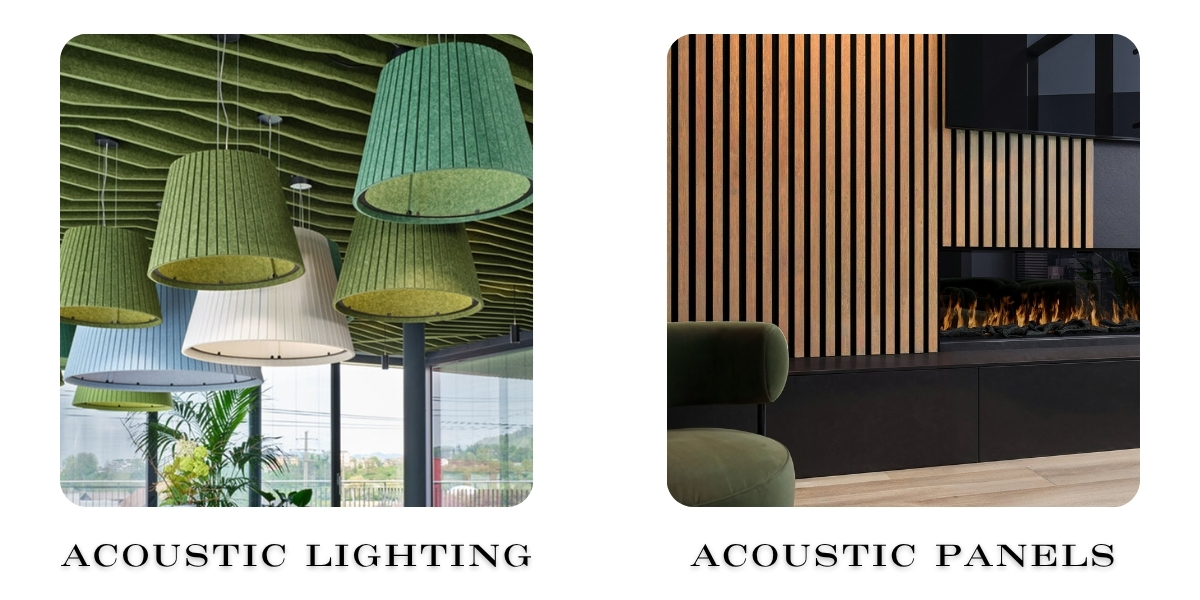
Wielu klientów pyta: Czy nie mogę po prostu kupić tańszych paneli dla zwierząt i zachować stare światła? Chociaż jest to opcja, rzadko jest najbardziej wydajna dla biura o wysokich wynikach.
Szczegółowa tabela porównawcza
| pośrednik | Oświetlenie akustyczne (zintegrowane) | Panele akustyczne (dodane) |
| Wykorzystanie przestrzeni | Podwójny cel; wykorzystuje ten sam ślad, co oświetlenie. | Wymaga dedykowanej przestrzeni na ścianie lub suficie. |
| Koszt instalacji | Pojedynczy koszt pracy (elektryk). | Wielokrotne koszty pracy (elektryk + stolarz). |
| wartość estetyczna | Architektoniczny element centralny; nowoczesny wygląd. | Często wygląda jak refleksja lub bałagan. |
| Zasięg akustyczny | Absorpcja 360 stopni (zawieszenie). | Zwykle jednostronne absorpcja (montaż flush). |
Kluczowy wgląd
Oświetlenie akustyczne to nie tylko zamiennik paneli, to awansować. Umieszczając materiał absorpcyjny bezpośrednio wokół źródła światła, często umieszczasz go dokładnie tam, gdzie są ludzie – nad biurkami i stolikami spotkań.
Załącznik techniczny i odniesienie do standardów
W przypadku danych inżynieryjnych przedstawionych w tym przewodniku odnieśliśmy się do następujących standardów branżowych i metodologii laboratoryjnych:
- ASTM C423-17: Standardowa metoda testowa współczynników pochłaniania dźwięku i pochłaniania dźwięku metodą pogłosu (stosowana w celu kontrastowania pomiarów 2D vs 3D).
- Równanie Sabine: $RT60 = 0,049 \frac{v}{A}$ (podstawa matematyczna dla wszystkich obliczeń czasu pogłosu użytych w naszych symulacjach Feltlite).
- Metoda C (protokół obiektu z odstępem): W oparciu o praktyki montażu zawieszonych przegród i opraw do obliczenia widocznego NRC.
- ISO 354: Międzynarodowy standard pomiaru pochłaniania dźwięku w pomieszczeniu pogłosowym.
Podsumowanie końcowe
Oświetlenia akustycznego nie należy oceniać przy użyciu tradycyjnych metryk materiałowych, takich jak NRC, ponieważ działa jako system przestrzenny, zawieszony, a nie ciągła. Najdokładniejszym sposobem oceny wydajności jest Redukcja RT60, Całkowita liczba Sabina, a Metoda C (płaszczyzna wyobrażona) obliczenia. Koncentrując się na systemie, a nie na materiale, architekci mogą zaprojektować przestrzenie, które są oszałamiające wizualnie i spokojne akustycznie.
wnioskowanie
Podstawową zmianą w nowoczesnym projektowaniu biura jest odejście od postrzegania akustyki jako produktu i zaczynanie postrzegania go jako System. Jak już zbadaliśmy, zależność branży od NRC jest dziedzictwem w projektowaniu 2D – przydatna w przypadku dywanów i płaskich sufitów, ale matematycznie niezgodna z zawieszoną rzeczywistością 3D, zawieszonej rzeczywistości oświetlenia akustycznego.
traktując priorytetowo Redukcja RT60 i Całkowita liczba Sabina, architekci mogą wyjść poza zgadywanie. Integracja absorpcji dźwięku bezpośrednio w oprawach oświetleniowych nie pozwala zaoszczędzić tylko na kosztach pracy i materiałach; stawia rozwiązanie dokładnie tam, gdzie istnieje problem: w pustce przemysłowej bezpośrednio nad siłą roboczą.
W 2026 roku, wysokowydajne miejsce robocze nie jest już definiowane przez to, jak bardzo można przykleić się do ściany, ale przez to, jak inteligentnie możesz dostroić powietrze. Oświetlenie akustyczne to most, który pozwala nam zachować surowe, architektoniczne piękno otwartych sufitów, zapewniając jednocześnie spokojny dźwięk niezbędny do głębokiego skupienia i współpracy.