ACOUSTIC MATERIALS · WALLS
Acoustic Wall Panels for Quieter, Better-Designed Interiors
Reduce echo, control reverberation and improve speech clarity with acoustic wall panels developed for commercial interiors. This collection brings together wood slat panels, fabric-wrapped absorbers, engraved felt acoustic panels and sculptural acoustic wall tiles, giving architects and contractors several ways to integrate sound absorption into the wall design.
Hard Walls Make Sound Linger.
Glass, concrete, plaster and other hard finishes reflect sound back into the room instead of absorbing it. These repeated reflections increase reverberation, reduce speech intelligibility and make offices, restaurants, classrooms and public spaces feel louder than expected. Sound absorbing wall panels introduce useful absorption without treating the interior like a recording studio.
Acoustic wall panels reduce reflected sound within the room, helping conversations remain clearer and the space feel more comfortable.
Four Acoustic Wall Panel Systems for Different Interior Needs.
Explore four decorative acoustic wall panel systems developed for offices, meeting rooms, hospitality spaces, schools and other commercial interiors. Compare their materials, surface finishes, standard dimensions, acoustic construction and customization options to find the right solution for your project.
From the natural linear appearance of acoustic slat wall panels to fabric-wrapped, engraved and three-dimensional PET designs, each system offers a distinct way to reduce reflected sound while complementing the interior architecture.
Acoustic Slat Wall Panels
MDF or solid-wood slats fixed to a polyester fiber acoustic backing create warm, continuous acoustic wall paneling. The timber face establishes the architectural rhythm while the felt layer and the gaps between slats help control reflected sound in hospitality, workplace and education interiors.
Fabric-Wrapped Acoustic Panels
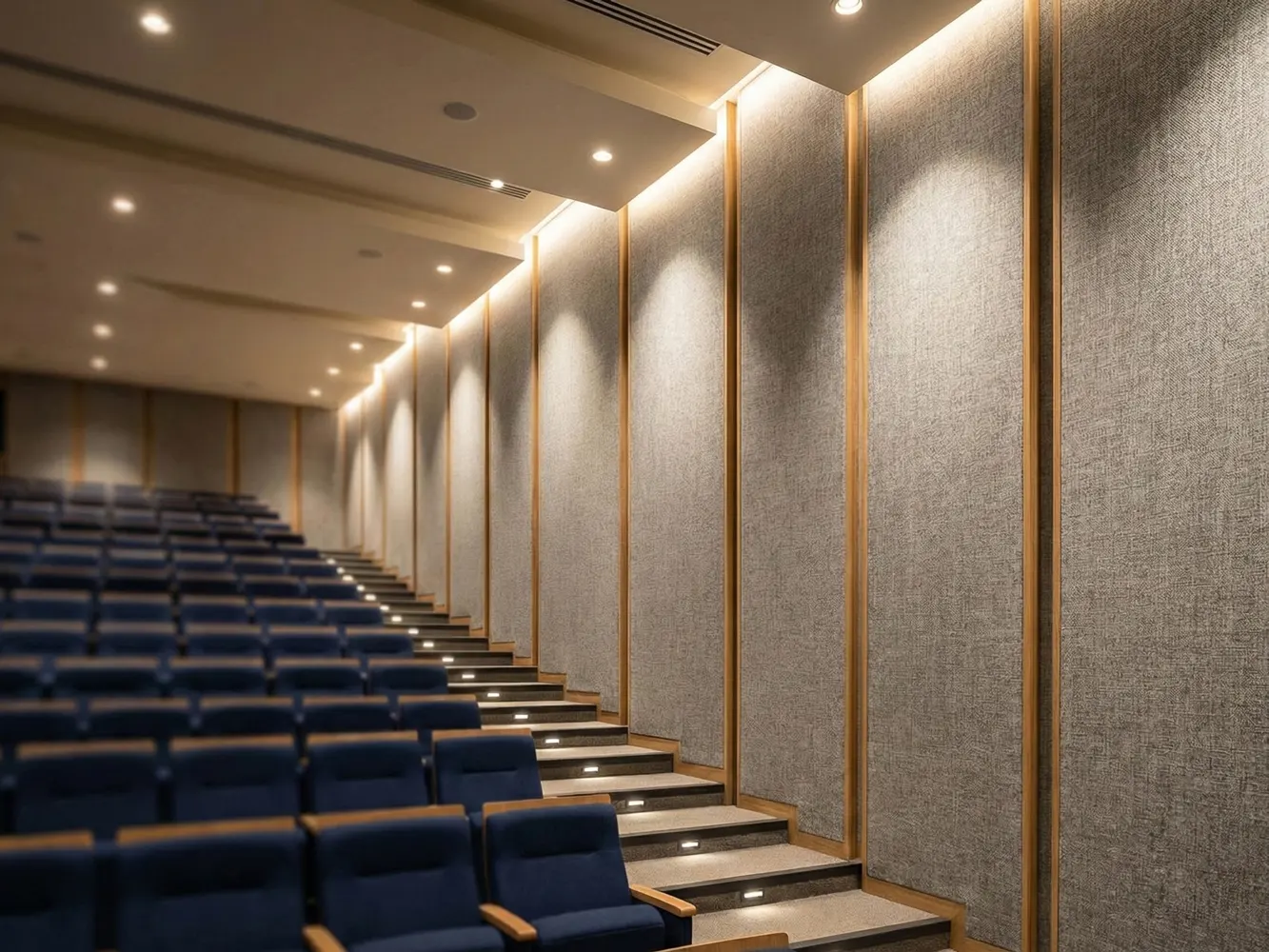
An acoustically transparent fabric, leather or fiberglass-fabric finish wraps a thicker glass-fiber core. These sound panels for walls suit projects that prioritize broad absorption, clean rectangular modules and a softer visual finish, with selectable density, frame, edge and mounting construction.
Engraved PET Acoustic Wall Panels
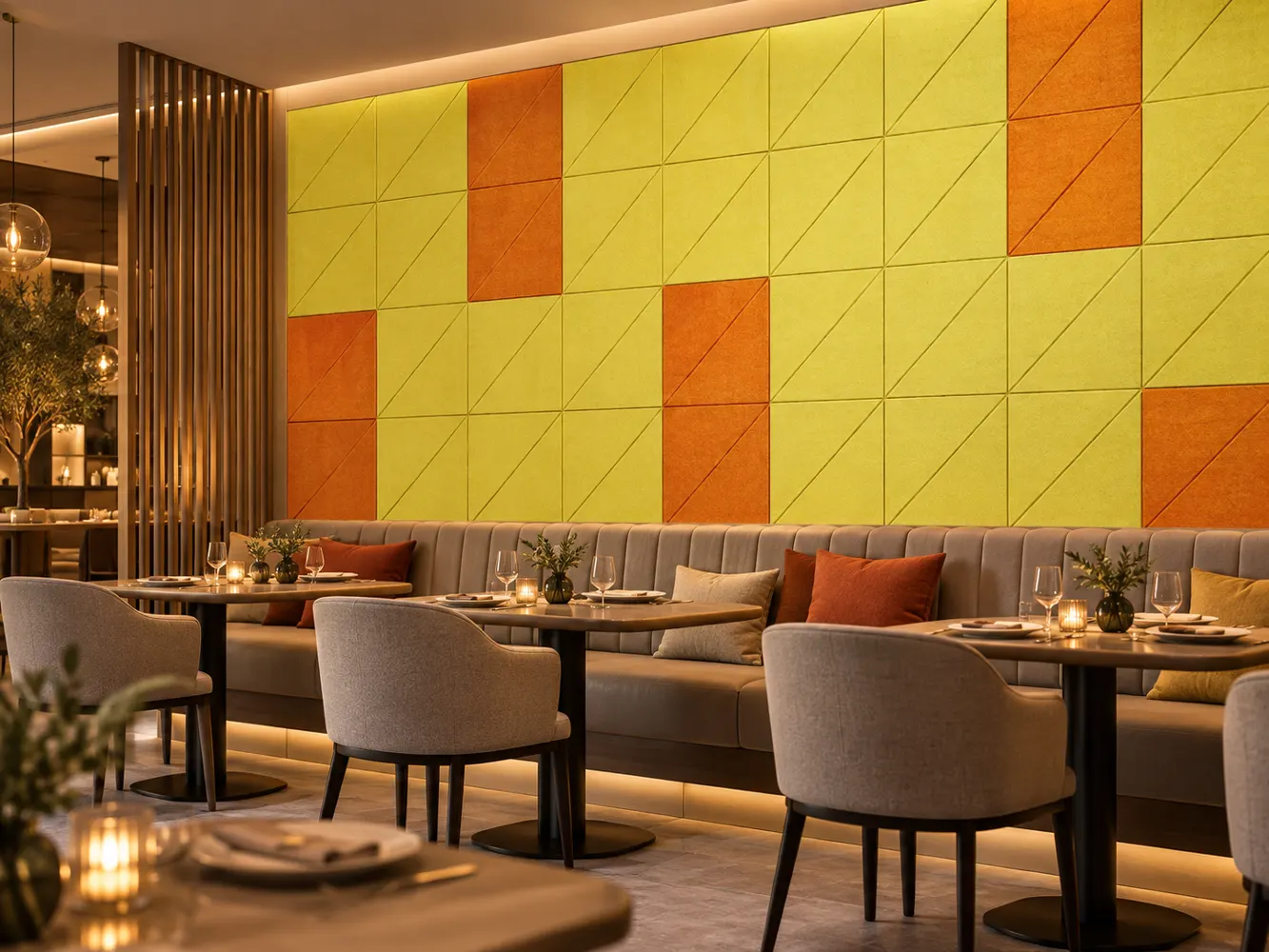
Made from 100% polyester fiber felt, these acoustic wall panels can be CNC cut or V-groove engraved with geometric lines, curves and repeating architectural patterns. More than 100 catalog designs are available across square, rectangular and full-height panel formats, while custom patterns can be developed for branded walls and project-specific layouts. Panel dimensions, thickness and density vary by pattern series and should be selected together rather than treated as one fixed specification.
3D PET Acoustic Wall Panels
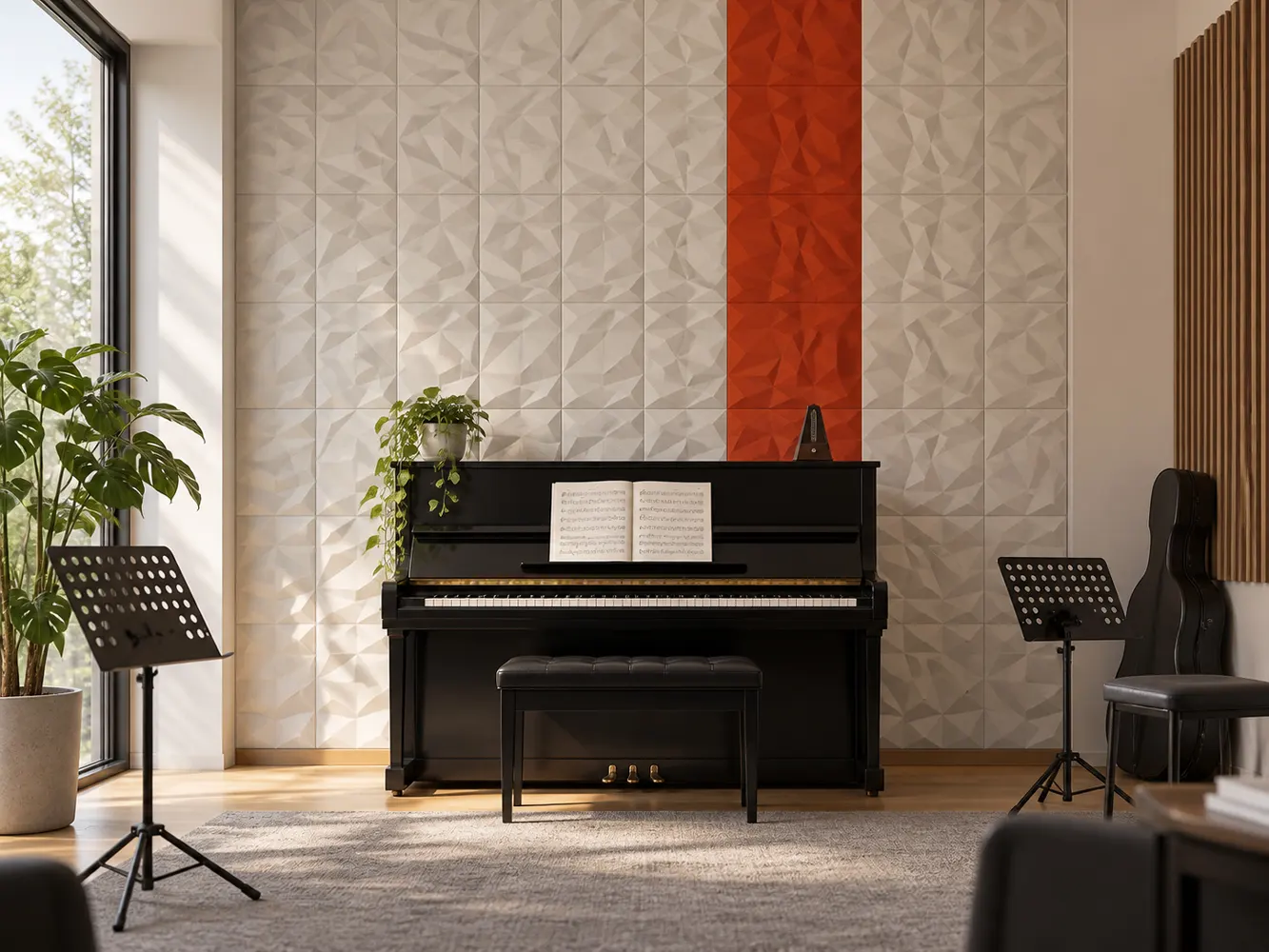
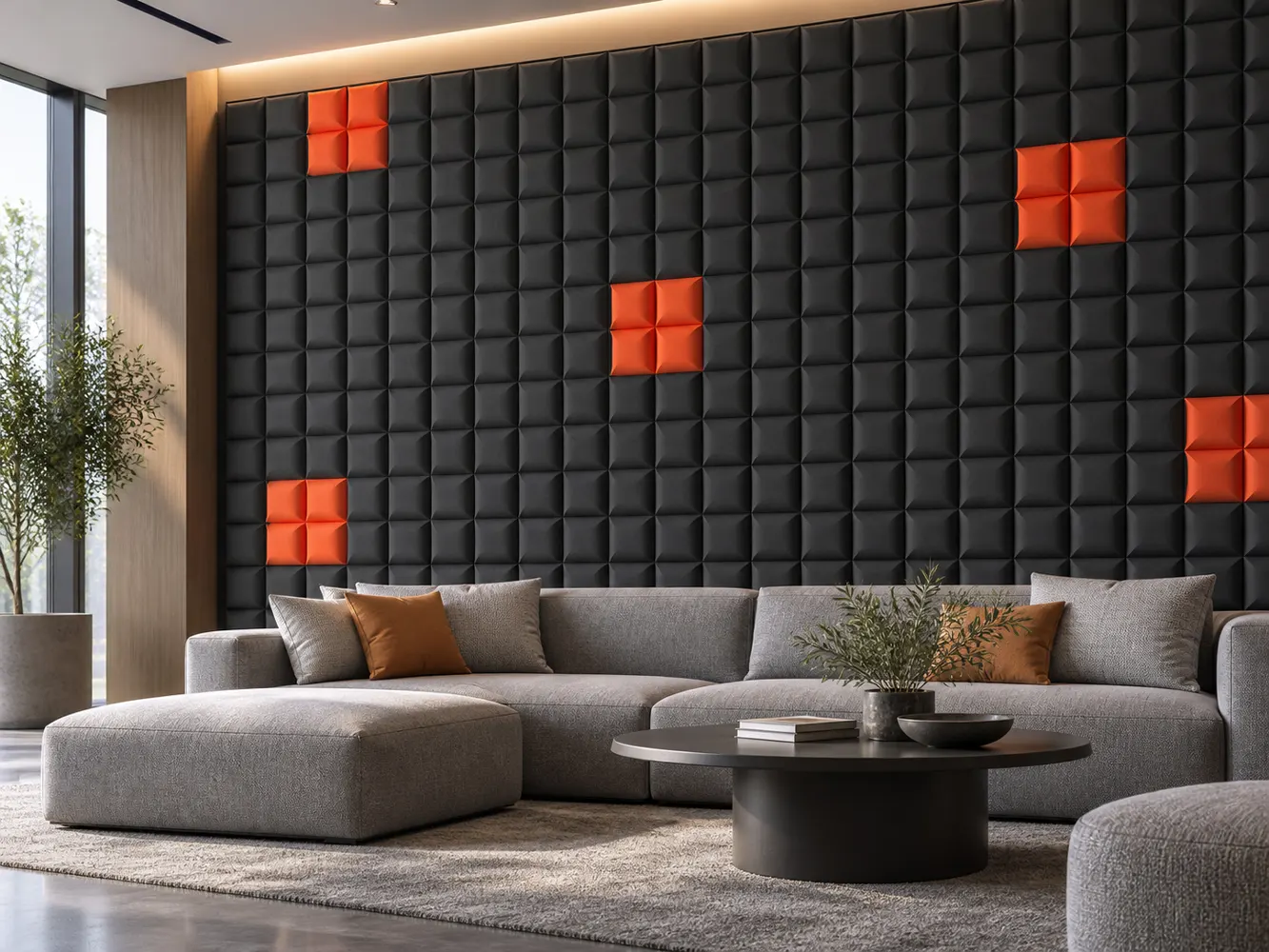
Made from formed polyester fiber felt, these 3D acoustic wall panels use faceted, ribbed, wave and pillow-like reliefs to introduce depth, shadow and sound absorption. The catalog includes 28 model references across square, triangular and hexagonal modules. Each mold has its own face size and finished depth, so the model, dimensions and installation method should be selected together.
Which Wall Panel Fits Your Space?
Start with the visual intent, room activity, available wall area and required durability. Then compare material construction, panel thickness, edge treatment, mounting method and the documents available for the exact product. This prevents products with very different assemblies from being compared only by appearance.
Place Absorption Where Reflections Build Up.
Start with the room layout, sound sources, listening positions and the largest uninterrupted hard surfaces. Wall-mounted acoustic treatment is most effective when its location responds to actual reflection paths rather than filling an arbitrary decorative zone. The useful exposed area matters as much as panel style.
Three Decisions Shape The Acoustic Result.
Useful coverage, panel construction and mounting condition work together. Confirm all three before comparing performance or calculating quantities.

More exposed absorbing area generally controls more reflected energy, but the appropriate amount depends on room volume, surface finishes, occupancy and target reverberation. Calculate acoustic panels for a room from project conditions rather than applying one fixed wall percentage.

Core material, density, thickness and visible facing all influence how an acoustic wall panel responds across different frequencies. Compare product data only when the tested construction matches the panel being considered for the project.

Direct fixing, resilient backing and a deliberate air cavity can produce different results from the same visible panel. Record the substrate, cavity, backing and fixing method so the installed assembly matches the intended specification.