 English
  简体中文
简体中文  Deutsch
  Español
  Français
  Italiano
  日本語
日本語  한국어
한국어  Polski
  Português
  Русский
  Türkçe
  Nederlands
  ไทย
ไทย  Tiếng Việt
Most buyers searching for a Custom Acoustic LED Pendant Light already know what they want. They have a reference image, a deadline, and a space that needs something specific. What they do not always know is whether the manufacturer they contact can actually build it.
In late December, Steven, a Senior Project Manager at a US-based trade show booth company sent us an email. His client had seen our blue acoustic pendant at an exhibition and wanted five of them. One at 1500mm. Four at 1150mm. All in blue. All needed before a fixed exhibition date.
What did not exist yet were the engineering drawings, the structural validation, and the color samples. All of that still had to be built.
What followed was not a standard order. It was an engineering process that started with two reference photos, moved through structural drawings and color board approvals, and ended with five custom acoustic pendants installed in a live trade show booth, delivered on time.
This is how it happened.
FROM A REFERENCE PHOTO TO A STRUCTURAL DRAWING
I forwarded Steven’s email to our engineering team the same afternoon. Two reference photos went with it, that was the entire design brief. No drawings. No specifications. Just photos of a product his client had seen at an exhibition and wanted recreated at nearly three times the size.
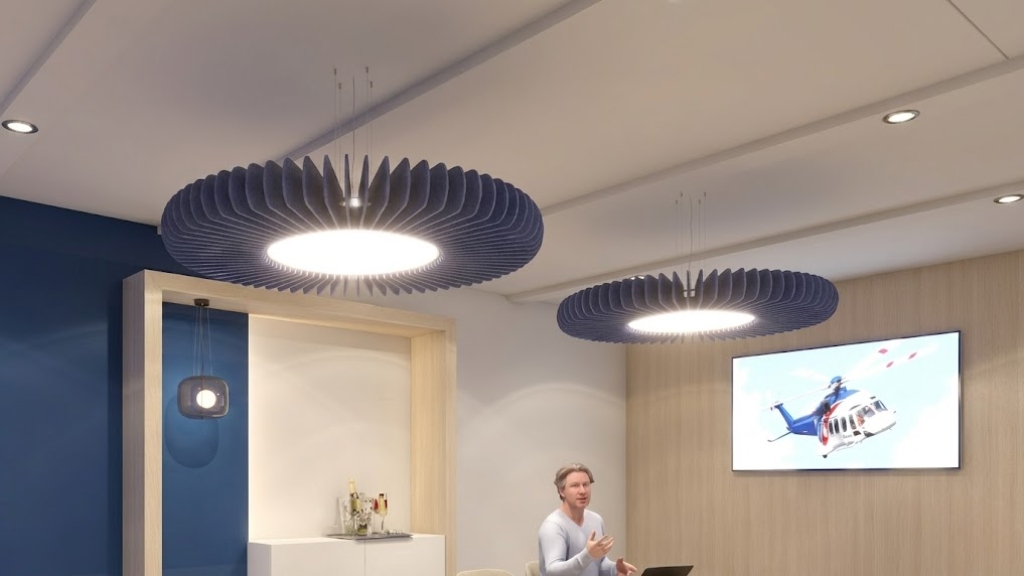
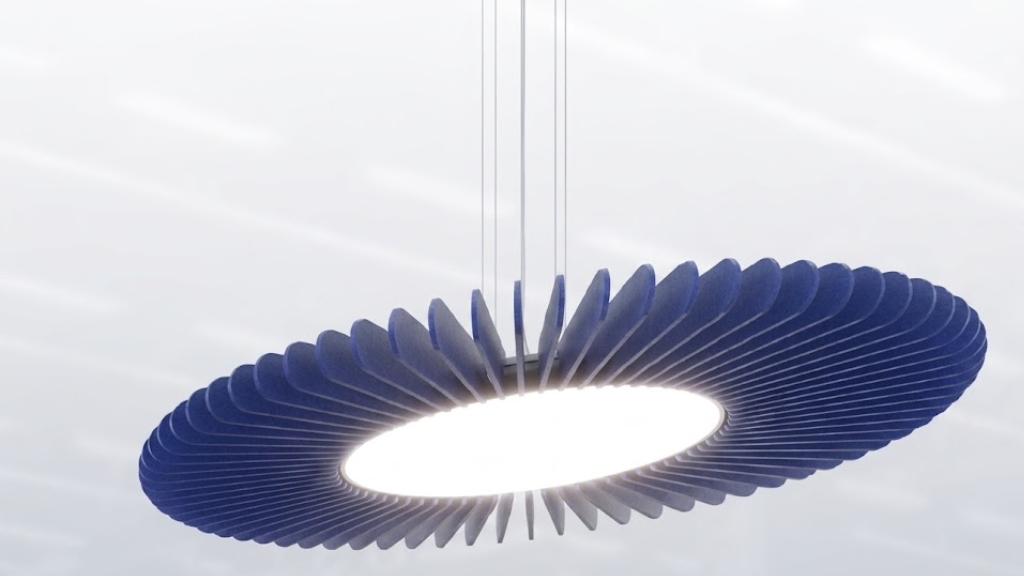
I told them what I needed: not a rough estimate, an actual answer on whether we could build this at 1150mm and 1500mm.
Then I waited.
Anyone who works in custom manufacturing knows this feeling. You have a client on one side with a real deadline. You have your team on the other side working through a problem that has no guaranteed solution yet. You cannot promise anything. You just wait and hope the answer comes back yes.
By the next morning, they had one. And it came with these :
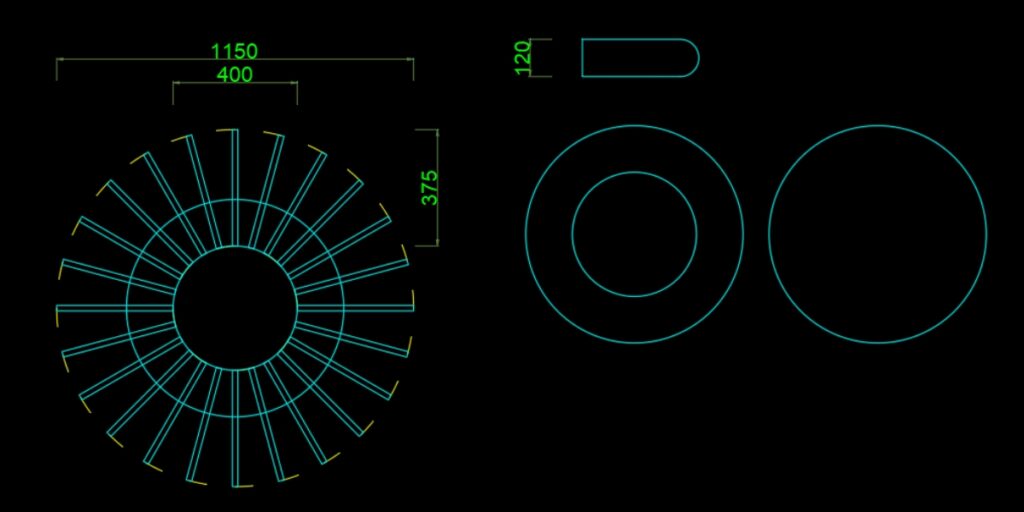
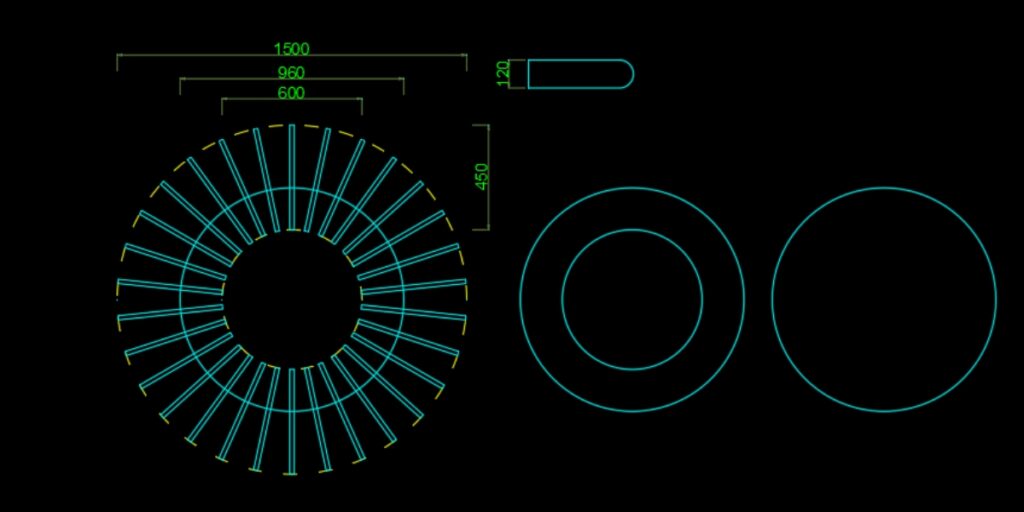
I remember looking at those drawings and feeling the tension drop out of my shoulders. These were not sketches. These were real production documents, built from scratch, from Steven’s two reference photos, for two sizes we had never manufactured before. Our factory designers built these from two exhibition photos. No customer drawings were involved. That is the capability this project ran on.
Most buyers assume they need a complete specification sheet before approaching a manufacturer. They do not. A reference image and a size requirement is enough to start. Turning that into a buildable design is our job, not yours.
Here is what that engineering process actually changed:
| Factor | What the Customer Provided | What Our Factory Designers Built From It |
| Size | Exhibition scale, unspecified | 1150mm and 1500mm defined |
| Structure | Visual only, unknown internals | Internal aluminum ribs designed |
| Blade layout | Approximate, from photo | Recalculated for each diameter |
| Profile depth | Slim, as seen at exhibition | 120mm confirmed and maintained |
| Material | Not specified | Aluminum + PET confirmed |
| Sag risk | Unknown | Resolved with hidden rib support |
Now I had something real to send him. But the drawings were only half the story.
The Color Decision
Steven had asked for blue. I thought that was the easy part.
It was not.
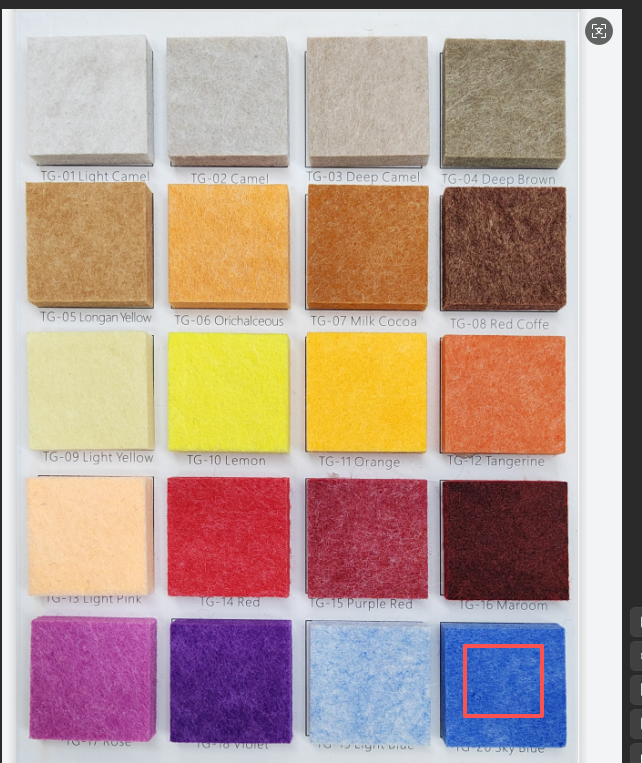
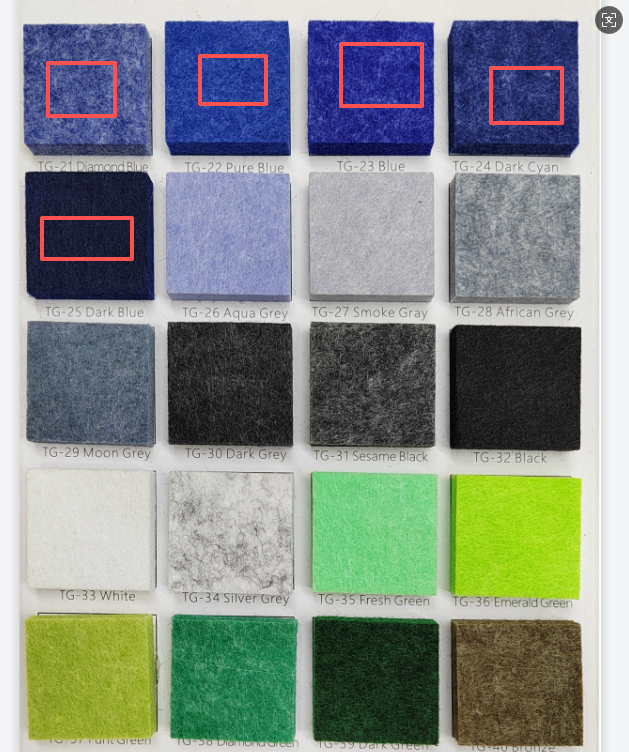
I have been in this long enough to know that “blue” means something different to everyone. The blue a client pictures in their head is almost never the blue that arrives in a box. And in a trade show booth, where everything is designed to make a specific impression, the wrong shade can undo everything else you got right.
So before I sent Steven anything, I pulled our full color board. Five blue options went to him with one clear message: look at these carefully, because what you confirm here is what gets built.
TG-20 Sky Blue. TG-21 Diamond Blue. TG-22 Pure Blue. TG-23 Blue. TG-25 Dark Blue. Each one photographs differently. Each one reads differently under booth lighting. I wanted him to see all of them before he made a decision he could not take back.
He came back with his answer quickly. The shade matched his client’s booth environment exactly — I could see that even from the reference photos he had sent.
This is the part of a custom project that most people underestimate. A color code sent over email is not a color confirmation. It is a guess. Physical samples exist for exactly this reason — what you approve on a swatch is what arrives in the box. There is no version of this process that skips that step and ends well.
That was the moment I picked up the phone and told our factory we were ready. Drawings confirmed. Color confirmed. Nothing left to guess.
Getting Every Detail Right
Once the drawings and color were confirmed, I thought the hard part was done.
It was not. It was just beginning.
Over the next ten days, Steven and I went back and forth on details that most people would not think to ask about upfront. Every question he sent, I answered the same day. Not because I had to. Because I knew what happens when questions sit unanswered in someone’s inbox — timelines slip, clients start worrying, and projects that should close cleanly start to feel uncertain.
Here is what we worked through together:
| Parameter | What Was Discussed | Why It Mattered |
| Diameter | 1150mm and 1500mm final confirmation | Structural drawings needed to be locked |
| Acoustic fabric | Sound absorption level and color shade | PET performance varies by thickness |
| Light source | Color temperature, power, brightness uniformity | Large surface needs even distribution |
| Installation | Suspension method and overall depth | Booth ceiling had specific clearance limits |
| Electrical | Power supply to match US local standards | Wrong voltage spec means unusable product |
None of these conversations were dramatic. They were just careful. And careful is exactly what this kind of project needs.
This is something I have learned over many projects: the details that feel small at the quoting stage become the problems that delay installation. Wrong voltage spec. Suspension depth that does not clear the ceiling. A color that looked right on a screen but reads differently under booth lighting. Ten days of careful back and forth is not slow. It is what on-time delivery actually looks like from the inside.
Then something shifted.
Steven wrote to tell me his client had won the project. The booth was confirmed. The installation date was set. He needed us to move.
That email felt different from all the others. This was not a question. It was a green light.
| Model | Description | Specs | Qty | Unit Price |
| AR1150-400 | Acoustic LED Pendant | D1150mm, Light D400mm, 4000K, CRI≥90, UGR<22, Aluminum+PET, AC220-240V | 4 pcs | From $220+ |
| AR1500-600 | Acoustic LED Pendant | D1500mm, H120mm, Light D600mm, 4000K, CRI≥90, UGR<22, Aluminum+PET, AC220-240V | 2 pcs | From $320+ |
Order confirmed. Advance payment received. I walked to our production floor and told them we were starting.
Production and Delivery
I have worked on enough trade show projects to know that the installation date is sacred. Everything else can flex. That date cannot.
Steven’s booth had a fixed date. Once the order was confirmed and the advance payment cleared, we had one job: get five custom acoustic pendants built, packed, and shipped before that window closed.
Production ran 5 to 7 days. No delays. No calls asking for updates. No scrambling at the end.
Fast production is not a factory superpower. It is the result of everything that happened before it. When drawings are locked, color is confirmed, and every parameter is agreed upon before production starts, the factory has nothing to stop for. The speed at the end is bought by the patience at the beginning.
Then this arrived in my inbox:

That single word “Yay” told me everything I needed to know. I sent the assembly instructions within the hour.
A few days later, another email came through. This one had photos attached.

I want to describe those photos because they are worth describing.
The 1500mm unit hung at the center of the booth ceiling, holding the whole space together. The four 1150mm units were arranged around it. Behind all five was a deep blue accent wall — and the color of the PET fins matched that wall exactly.
Not approximately. Exactly.
It looked like the booth had been designed around our lights from the very beginning.
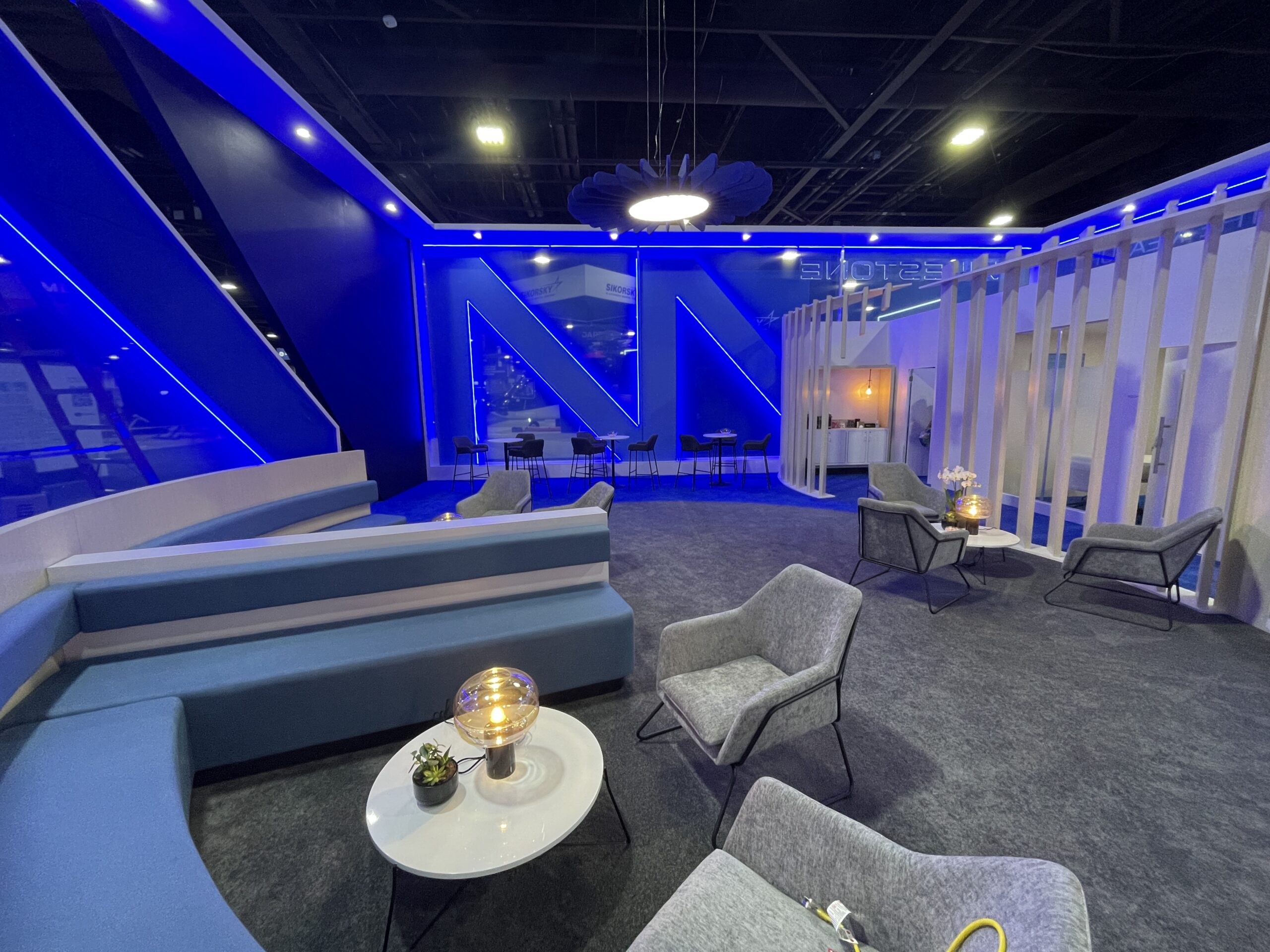
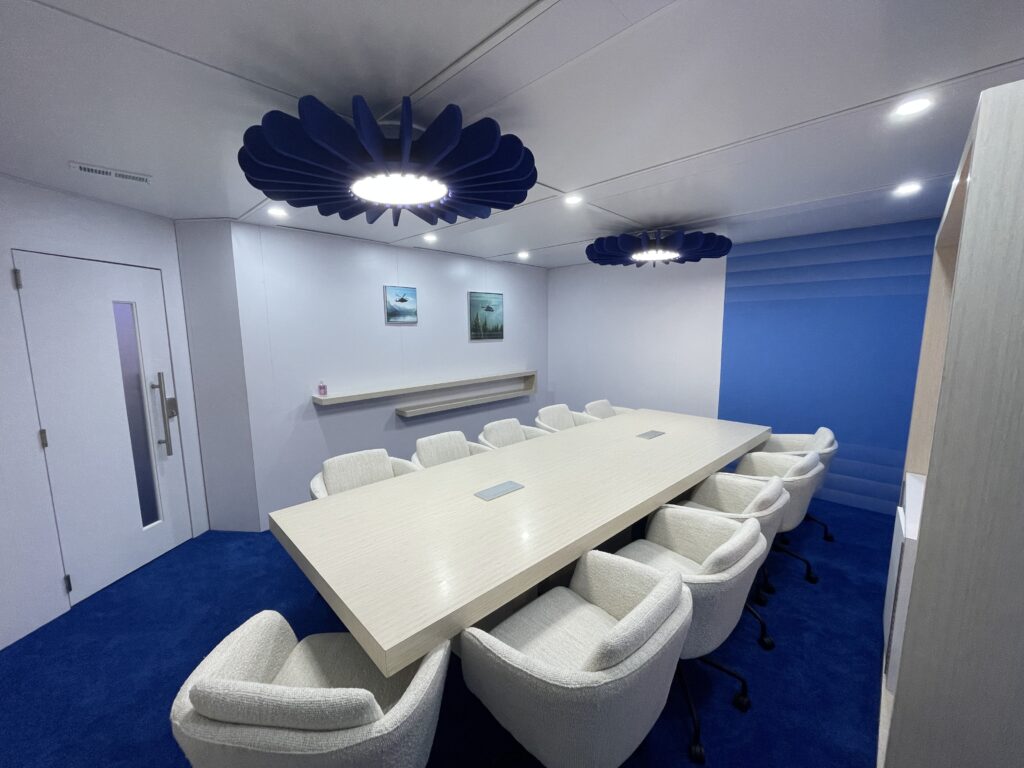
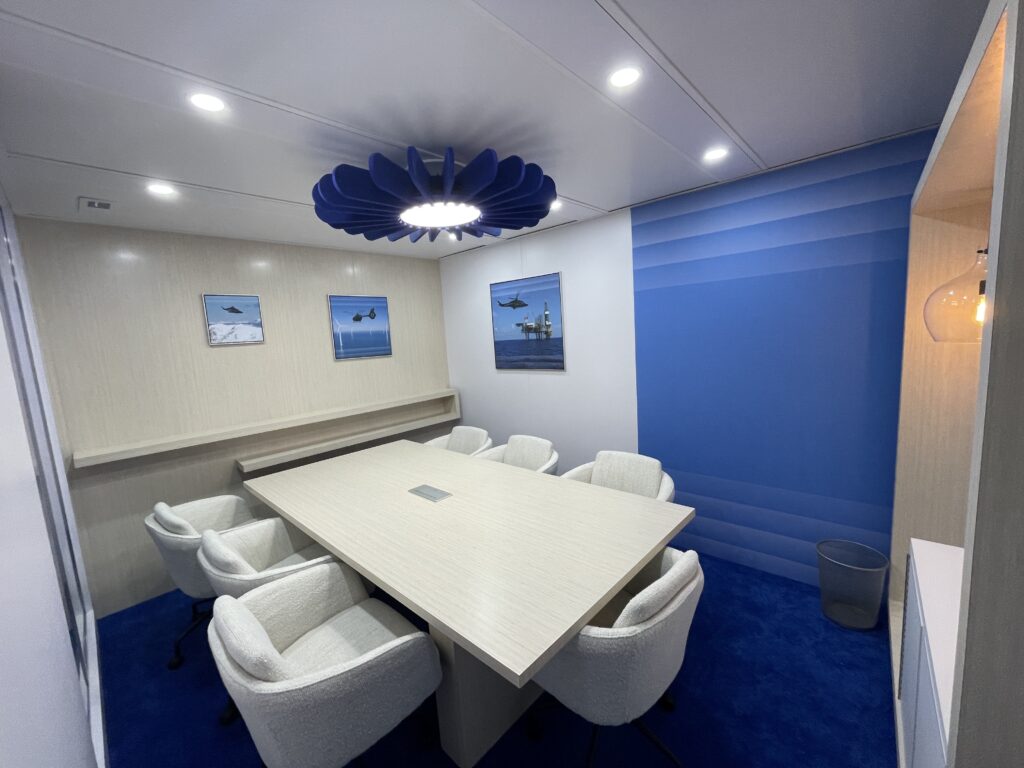
I sat with that for a moment. Every same-day reply. Every color swatch. Every back and forth on ceiling heights and electrical specs. That is what those photos represented.
Then Steven said something that stayed with me.
He told me that for any similar project in the future, we would be the first people he calls. That is not something a client says after a transaction. That is something they say after a partnership.
Why It Worked
Looking back at this project, nothing about it was unusually complicated. The sizes were large. The deadline was tight. The customization was real. But none of that is what made it work.
What made it work was that nothing stalled.
Engineering came back with drawings before I replied to Steven. Color was confirmed with physical samples, not a screenshot. Every question he sent got an answer the same day. Production started the moment payment cleared. Documentation was ready before the shipment left.
When there are no gaps between stages, clients do not have time to get anxious. And anxious clients are the ones who start looking elsewhere.
Steven never had to wonder where things stood. That is not a small thing in a project tied to a fixed exhibition date.
| What Could Have Gone Wrong | What We Did Instead |
| Quoted without engineering review | Confirmed feasibility first |
| Sent color codes instead of samples | Sent physical color boards |
| Left questions unanswered | Replied same day, every time |
| Started production before confirmation | Waited for drawings and color approval |
| Missed the exhibition deadline | Delivered within 5 to 7 days |
This project closed with five custom acoustic pendants installed in a live trade show booth, a client who confirmed future work, and photos that showed the result matched the brief exactly.
Every buyer I speak to asks two things first: how much and how fast. Both are fair questions. But in a custom project like this one, neither of them tells you what you actually need to know. What you need to know is whether the person on the other end of that email will still be paying attention on day ten of the back and forth. Whether they will send you physical samples instead of a color code. Whether they will walk to the production floor the moment your payment clears. That is what determines whether a project like this ends with installation photos — or with problems. It is harder to put in a quote. But it is exactly what a case study is for.
That is what a reliable process looks like in practice.
If you are working on a project that needs custom sizes, a specific finish, or a deadline that cannot move, we would like to hear about it.
Send us your reference image, your size requirement, and your timeline. We will come back to you with a real answer, not a catalog link, not a maybe. An actual assessment of what we can build and how fast we can get it to you.